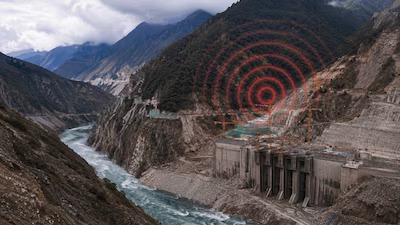
New Delhi: China’s ambitious plan to build the world’s largest hydropower project on the Yarlung Tsangpo River has come under renewed scrutiny after a study by Chinese geologists warned that the proposed dam site lies on an active tectonic fault capable of affecting the long term stability of the project.
The research, conducted by scientists affiliated with the China Geological Survey, identified the Paizhen Fault near the Great Bend of the Yarlung Tsangpo in southeastern Tibet as a highly active geological structure that has remained in motion since the Pleistocene era. According to the study, continued tectonic activity in the region could pose significant challenges to the construction and safety of large infrastructure, including dams, tunnels, bridges and reservoirs.
Researchers warned that repeated movement along the fault could destabilise mountain slopes and surrounding rock formations, increasing the risk of landslides, rockfalls and ground deformation. Such conditions could threaten key components of the hydropower project, particularly underground tunnels, powerhouse caverns and other major engineering structures planned for the site. The study recommends continuous geological monitoring, reinforcement of vulnerable slopes and integrating fault activity into every stage of the project’s planning and construction.
The mega project, launched in 2025, is being developed in Medog County near the Great Bend of the Yarlung Tsangpo River. Designed to generate approximately 60 gigawatts of electricity, it is expected to surpass the Three Gorges Dam and become the world’s largest hydropower station. The river later enters India as the Siang in Arunachal Pradesh before flowing into Assam as the Brahmaputra.
The findings are expected to renew concerns already expressed by India over the project’s location in one of the world’s most seismically active regions. New Delhi has consistently highlighted the risks posed by earthquakes, landslides and glacial hazards, while also raising concerns about the potential downstream impact of structural failures, sudden water releases or changes in river flow that could affect millions of people living along the Brahmaputra basin.
India has also sought greater transparency from China regarding the project’s design, operation and hydrological data, stressing that developments on transboundary rivers should consider the interests of downstream nations. While China maintains that the project is a run of the river hydropower scheme that will not significantly alter downstream water flows, the latest study adds fresh scientific weight to the ongoing debate over the safety and long term implications of the massive Himalayan project.
Sorry, there was a YouTube error.