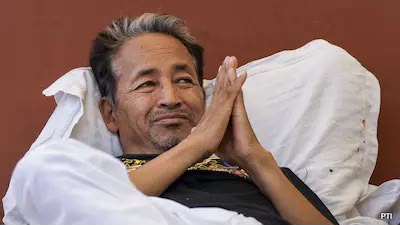
NEW DELHI: The Delhi High Court on Tuesday approved the transfer of Ladakhi activist Sonam Wangchuk from Safdarjung Hospital to Medanta Hospital, observing that his concerns could not be ignored. The formal order is expected to be issued after the court completes the necessary proceedings.
Wangchuk has been on an indefinite hunger strike in support of the Cockroach Janta Party’s (CJP) protests over the alleged NEET UG 2026 paper leak and examination irregularities. He has been demanding greater accountability from the government and has insisted that his fast will continue until protesting students and activists are allowed to meet Members of Parliament.
Following the court’s decision, Wangchuk’s wife, Gitanjali Angmo, welcomed the move and expressed gratitude for allowing his treatment at the hospital chosen by the family.
During the hearing, the court reviewed medical reports submitted by doctors from Safdarjung Hospital, AIIMS and private medical experts. Wangchuk’s legal team argued that while some health parameters had changed, there was no immediate threat to his life and that his condition remained stable under continuous monitoring.
Government doctors, however, cautioned that his white blood cell count was low, increasing the risk of infection due to his prolonged fast. Despite these concerns, the Centre informed the court that it had no objection to Wangchuk’s transfer, provided it received the necessary approval through the legal process.
The court also heard a letter written by Wangchuk, in which he claimed he was being kept under strict surveillance at the hospital. According to his lawyer, the activist alleged that access to visitors had been heavily restricted and that his communication devices had been taken away.
Earlier this week, Delhi Police shifted Wangchuk from the protest site at Jantar Mantar to Safdarjung Hospital after the High Court directed authorities to take all necessary steps to protect his life. The move followed concerns that his prolonged hunger strike had put him at serious risk of organ failure.
Meanwhile, the CJP has continued its agitation, maintaining that the protest will continue until its demands receive a concrete response from the government.