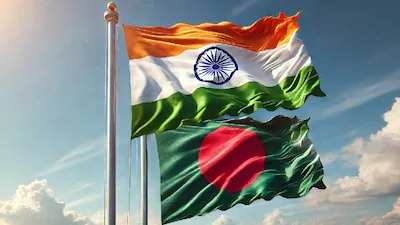
New Delhi: India has taken a firm position on the renewal of the 1996 Ganga Water Sharing Treaty with Bangladesh, making it clear that the agreement will not be automatically extended on Dhaka’s preferred terms. The 30-year treaty is scheduled to expire on December 12, 2026, setting the stage for fresh negotiations between the two neighbouring countries.
New Delhi is pushing for a new bilateral agreement that takes into account India’s domestic water requirements, federal interests and the concerns of states dependent on the Ganga before addressing Bangladesh’s demands for downstream water supplies.
The original treaty was signed in 1996 during Sheikh Hasina’s tenure as Bangladesh Prime Minister, when relations between the two countries were marked by greater political cooperation.
However, the political situation has changed significantly. Under the current Bangladesh Nationalist Party (BNP) government led by Tarique Rahman, discussions surrounding water sharing have become increasingly contentious.
Political figures in Bangladesh, including National Citizen Committee leader Nahid Islam, have raised demands linking water-sharing arrangements with broader bilateral issues, including transit facilities. There have also been calls for public protests over the issue.
The changing political environment has prompted India to approach the negotiations with greater caution.
One of the major disagreements concerns the allocation of Ganga water during the dry season, when river flows decline considerably.
Bangladesh is seeking the restoration of a guarantee clause similar to the one included in the 1977 agreement. The proposed arrangement seeks to secure a fixed minimum downstream share of up to 80 per cent, even during periods of reduced water availability at the Farakka Barrage.
India, however, is resisting fixed minimum guarantees and favours a flexible, availability-based arrangement.
Under India’s proposed approach, water releases would be determined according to actual river flow conditions. This would allow the country to protect the requirements of upstream states, particularly West Bengal and Bihar, which depend on the Ganga for agriculture, industries and municipal water supplies.
With the December 2026 expiry approaching, the future of the treaty is emerging as an important issue in India-Bangladesh relations. Both countries face the challenge of reaching a mutually acceptable arrangement that addresses downstream water requirements while protecting India’s domestic interests.
Sorry, there was a YouTube error.