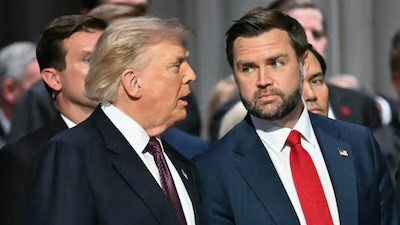
Washington: US President Donald Trump has expressed uncertainty over whether Vice President JD Vance will contest the 2028 presidential election, raising questions about the Republican Party’s future leadership following its major setback in the 2026 midterm elections.
Speaking to reporters at the White House on Wednesday, Trump said he had discussed several issues with Vance but was unsure about his plans for the next presidential race.
“Maybe he won’t run. I don’t know who’s going to run,” Trump remarked, suggesting that several Republican leaders could enter the contest or that the vice president might decide against seeking the presidency.
Vance has long been considered a potential successor to Trump and had previously indicated that he would make a decision about his presidential ambitions after the midterm elections.
The uncertainty surrounding Vance’s political future comes after he publicly blamed the ongoing US and Israel military campaign against Iran for the Republican Party’s poor electoral performance.
In a lengthy social media statement, Vance described the war as the primary reason behind the party’s defeat and questioned whether the military campaign had justified its political consequences.
He argued that the conflict had contributed to Republican losses, including the party’s failure to retain control of the Senate.
Vance also identified rising living costs and inflation, concerns over America’s foreign policy priorities and dissatisfaction with Washington’s relationship with Israel as major factors influencing voter sentiment.
Trump acknowledged that the Iran conflict had affected the Republican Party’s electoral prospects, particularly because of its impact on petrol prices. However, he defended his decision to launch the military campaign, insisting that preventing Iran from developing nuclear weapons remained a priority.
The President maintained that he would not have changed his approach and claimed that American military operations had significantly weakened Iran’s military capabilities.
The Republican defeat has intensified discussions about the party’s leadership beyond Trump’s presidency. With other prominent Republican figures, including Senator Ted Cruz, potentially considering presidential ambitions, competition for the party’s future leadership could emerge well before the 2028 election.
Vance’s criticism of the Iran war, combined with Trump’s uncertainty over his political plans, has added another dimension to the emerging Republican succession debate.
Sorry, there was a YouTube error.