Team Goemkarponn
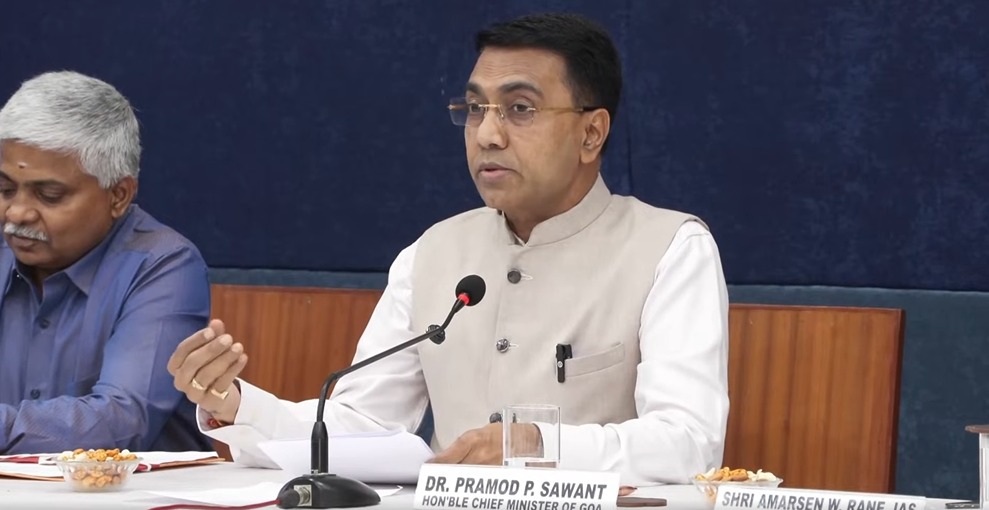
PANAJI: Chief Minister Dr Pramod Sawant has directed government secretaries, heads of departments and senior officials to ensure that files are not kept pending indefinitely, stressing that the government machinery must function efficiently and remain responsive to the needs of the people. He said officials must take timely decisions, simplify administrative procedures and ensure that citizens do not have to make repeated visits to government offices to get their work done.
Addressing government officials during Vigilance Awareness Week, Sawant emphasised that the primary responsibility of the administration is to serve the public and make governance accessible, transparent and citizen-friendly. He urged officials to ensure that people leave government offices satisfied with the services received rather than frustrated by unnecessary delays and bureaucratic hurdles.
The Chief Minister said laws and regulations should not be used as excuses to delay files or complicate routine administrative work. Instead, officials should apply the rules in a manner that facilitates public services and improves ease of living. He stressed that administrative efficiency depends on the willingness of officers to resolve issues promptly while remaining within the legal framework.
Sawant observed that although around 90 per cent of government employees perform their duties sincerely, the negligence or misconduct of the remaining 10 per cent can damage the reputation of the entire administration. He called for greater accountability and closer supervision to ensure that the conduct of a few does not undermine public confidence in government institutions.
The Chief Minister also addressed the problem of pending files, instructing officials not to allow applications and official matters to remain unattended for months. If a matter falls outside an officer’s jurisdiction or cannot legally be approved, the file should be rejected with appropriate reasons or forwarded without delay to the concerned secretary or minister. He said unnecessary delays in decision-making must be avoided at every level of the administration.
Highlighting the response to the government’s Sarkar Tumchya Dari programme, Sawant observed that the large number of people approaching ministers during public outreach camps reflected the difficulties citizens face in getting their grievances resolved through local departmental offices. He indicated that government departments must strengthen their public grievance redressal mechanisms so that people do not have to depend on ministers or special camps for routine administrative assistance.
The Chief Minister identified several issues at the panchayat and field levels that require attention, including delays in issuing house numbers and tax assessments for eligible dwellings constructed before February 2025. He stressed the need to address such applications in accordance with applicable rules without regularising encroachments or structures that are not legally permissible.
He also raised concerns over delays in providing basic water facilities through the Public Works Department and electricity-related no-objection certificates and connections. Difficulties in obtaining essential services can lead residents to resort to unauthorised connections, resulting in administrative problems and revenue losses. Sawant stressed the need for departments and local authorities to address these bottlenecks promptly.
The implementation of the Mojem Ghor housing scheme was another area of concern. The Chief Minister urged officials to process applications efficiently and avoid unnecessary rejection or stalling at the ground level. He called for better coordination between departments and panchayat authorities to ensure that eligible beneficiaries do not face avoidable hurdles.
Sawant also spoke about complaints arising from internal rivalries within government departments. He referred to situations in which disgruntled employees, subordinates or retired personnel may approach the Anti-Corruption Branch or the Directorate of Vigilance with complaints motivated by personal disputes. He urged senior officers to address genuine administrative grievances through established channels while ensuring that legitimate allegations of corruption or misconduct receive appropriate scrutiny.
He further advised senior officials to maintain direct oversight of their departments and pay attention to the functioning of staff at all levels, including clerks and other subordinate employees. Better communication, supervision and timely resolution of workplace grievances, he said, can help prevent administrative disputes from escalating unnecessarily.