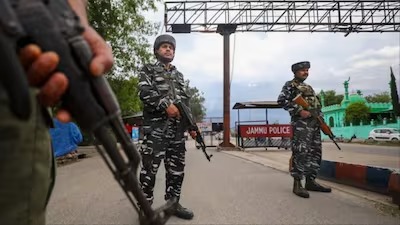
New Delhi: The Delhi High Court on Wednesday declined to entertain a Public Interest Litigation seeking mandatory use of body-worn cameras by Delhi Police and Rapid Action Force personnel during protests and crowd-control operations.
A bench headed by Acting Chief Justice Nitin Sambre questioned whether judicial intervention was necessary, observing that the use of body cameras by police was not an area lacking legal or administrative clarity.
The court said the issue went beyond the Delhi Police and involved policing across the country. It therefore questioned the need for the judiciary to issue directions requiring the government or legislature to introduce specific provisions on the matter.
The bench also asked the Centre to treat the petition as a representation and consider the issues raised in it.
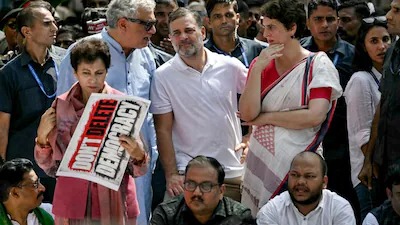
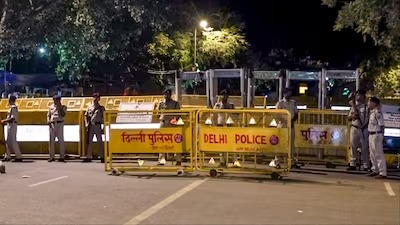
The PIL sought directions requiring police and RAF personnel deployed for crowd management and protest-related duties to wear body cameras. Such devices can provide video records of interactions between law-enforcement personnel and members of the public during potentially contentious situations.
During the hearing, Senior Advocate Akhil Sibal, appearing for the petitioner, argued that body-worn cameras were already being used by police personnel. However, he submitted that their deployment was inconsistent and appeared to be carried out in a “very haphazard” manner.
The petitioner sought a uniform system under which personnel involved in crowd-control operations would be required to use body cameras, potentially creating a continuous visual record of police actions during protests and other public-order situations.
The court, however, indicated that the matter could not be viewed solely through the lens of Delhi Police. It noted that policing was a broader subject and questioned whether a judicial order was the appropriate mechanism for creating or expanding a policy applicable to law-enforcement agencies.
The bench also pointed to existing statutory provisions and measures governing policing, suggesting that legislative or executive authorities could address areas where further regulation was considered necessary.
By declining to entertain the PIL while asking the Centre to consider it as a representation, the court left the issue open for the government to examine.
The case comes amid wider discussions over police accountability, transparency and the use of technology during protests and crowd-control operations. Body-worn cameras are increasingly viewed as a tool for maintaining an objective record of interactions, though questions remain over their mandatory deployment, operational guidelines and oversight.
Sorry, there was a YouTube error.