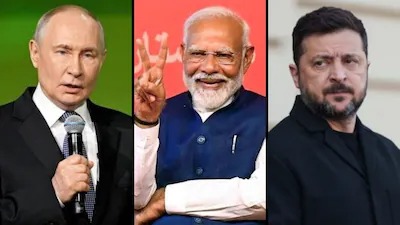
New Delhi: India has proposed a three-part truce framework aimed at reducing the immediate risks arising from the Russia-Ukraine war, with a focus on protecting critical infrastructure, maintaining essential trade and preventing attacks on commercial shipping in the Black Sea.
The proposal calls for an end to attacks on energy facilities and other critical infrastructure, continued movement of grain and energy through Black Sea ports, and a halt to strikes targeting commercial vessels operating in the region.
The first part of the proposal focuses on energy and other infrastructure that is essential for civilian life and economic activity. Stopping attacks on such facilities could help prevent further damage while creating conditions for wider de-escalation.
The second element seeks to keep grain and energy shipments moving through Black Sea ports. Maintaining these flows is important for protecting supply chains and limiting the economic consequences of disruptions caused by the conflict.
The third component focuses on commercial shipping. India has proposed ending attacks on commercial vessels operating in the Black Sea, extending the proposed protection beyond grain shipments to wider maritime trade.
India’s framework brings together issues that have previously been addressed separately in ceasefire initiatives. Earlier proposals from Egypt and Turkey had largely focused on ensuring the uninterrupted movement of grain, while a US initiative had centred on stopping attacks against energy infrastructure.
India’s proposal combines these concerns while adding a specific focus on the safety of commercial shipping.
The framework was conveyed during External Affairs Minister S Jaishankar’s September 3 visit to Kyiv, his first standalone visit to Ukraine as India’s foreign minister.
India has consistently maintained that dialogue and diplomacy are central to resolving the Russia-Ukraine conflict. The latest proposal follows that approach by focusing on practical measures that could reduce the immediate impact of hostilities even while a broader political settlement remains difficult.
By targeting energy infrastructure, essential commodity flows and commercial maritime traffic, the three-part framework seeks to limit the wider humanitarian and economic consequences of the conflict and keep vital trade routes functioning.
Sorry, there was a YouTube error.