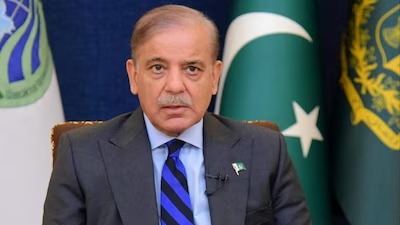
New Delhi: Pakistan Prime Minister Shehbaz Sharif has renewed his warning to India over the Indus Waters Treaty, declaring that “every single drop” of Pakistan’s water is a red line and stating that any attempt to alter Islamabad’s share of the river system would invite a strong response.
Speaking during Pakistan’s Independence Day address in Islamabad, Sharif said his country sought peace but cautioned that peace should never be mistaken for weakness. He asserted that Pakistan’s sovereignty and water rights were non negotiable, while also reiterating Islamabad’s position on Kashmir and linking it to broader tensions with New Delhi.
Sharif further claimed that Pakistan had prevailed during the May 2025 conflict with India and warned that any future confrontation would be met with an even stronger response. He also praised US President Donald Trump for his role in helping secure the May 2025 ceasefire, although India has consistently maintained that the agreement resulted solely from direct bilateral discussions and not third party mediation.
According to senior Indian intelligence sources, Sharif’s remarks are being viewed as a politically timed attempt to project strength amid Pakistan’s internal political and economic challenges. The assessment suggests the statements are aimed at consolidating domestic support while seeking to internationalise the water dispute by portraying India as the aggressor and encouraging outside diplomatic involvement.
Indian agencies also argue that the Indus Waters Treaty cannot be separated from the wider security environment. They maintain that India’s decision to keep the treaty in abeyance remains tied to national security concerns following the Pahalgam terror attack, which New Delhi attributes to Pakistan backed terrorist groups.
Signed in 1960, the Indus Waters Treaty governs the sharing of the six rivers of the Indus Basin. It grants India rights over the eastern rivers, the Ravi, Beas and Sutlej, while Pakistan receives the waters of the western rivers, the Indus, Jhelum and Chenab.