Team Goemkarponn
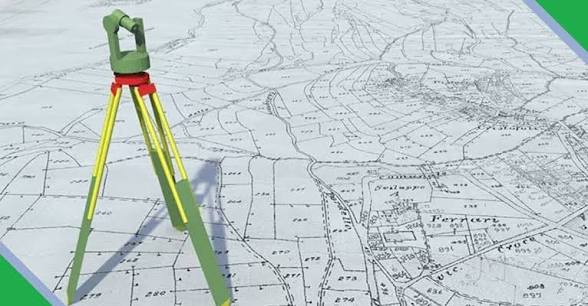
PANAJI: Facing delays in mapping and inspection work across Coastal Regulation Zone (CRZ) areas, the Goa Coastal Zone Management Authority (GCZMA) has decided to procure advanced surveying equipment to improve the accuracy and speed of its field operations.
During a recent meeting, the authority observed that the volume of structures requiring geo-referencing and mapping within CRZ limits has risen substantially. The shortage of modern survey tools has made it difficult to keep pace with inspections, resulting in a growing backlog of pending cases.
GCZMA officials pointed out that the authority’s existing Differential Global Positioning System (DGPS) equipment has technical limitations, particularly in areas with dense vegetation and certain coastal stretches. These constraints have affected its ability to carry out precise location mapping during field visits.
To overcome these challenges, the authority has approved an expenditure of **₹56.64 lakh** for the purchase of two state-of-the-art DGPS units equipped with Global Navigation Satellite System (GNSS) receivers and controllers. The procurement will be carried out through the Government e-Marketplace (GeM).
Officials said the new equipment will enable more reliable mapping of structures located within CRZ areas and support various coastal management and monitoring activities undertaken by the authority.
The mapping initiative forms part of efforts to comply with directives issued by the National Green Tribunal (NGT) and the Bombay High Court at Goa, both of which have stressed the need for accurate identification and monitoring of developments along the coast.
Over the past eighteen months, GCZMA has been carrying out aerial surveys to document and demarcate various structures and activities along Goa’s coastline, including residential buildings, hotels, beach shacks, recreational facilities, open plots and tourism-related establishments.
The move comes amid continued scrutiny of coastal development in Goa. Courts have previously expressed concern over violations of CRZ regulations and called for stronger enforcement measures. Authorities believe that the upgraded survey technology will help improve monitoring capabilities and support more effective regulation of activities in ecologically sensitive coastal regions.