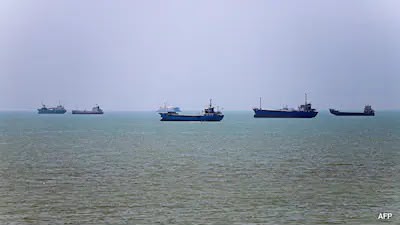
New Delhi: A growing number of commercial vessels heading to India are switching off their tracking systems while passing through the strategically crucial Strait of Hormuz, reflecting mounting security concerns in the region amid tensions involving Iran.
The practice, known in the shipping industry as “going dark”, involves disabling Automatic Identification System (AIS) transponders that normally broadcast a vessel’s identity, location and destination. While these systems are essential for maritime safety and navigation, ships operating in high risk areas sometimes turn them off to reduce visibility and avoid becoming potential targets.
Recent shipping patterns indicate that a majority of vessels travelling from the Persian Gulf to India adopted this strategy while crossing the narrow waterway. The trend has become particularly noticeable among ships registered in countries viewed as politically aligned with Western nations or perceived as unfriendly by Tehran.
Many vessels have increasingly chosen routes closer to the coast of Oman, where international naval presence is stronger. Others have continued using shipping lanes monitored by Iranian authorities, although some ships in these corridors have also opted to stop transmitting their location data.
Maritime operations in the region have become increasingly unpredictable following the escalation of tensions earlier this year. Shipping companies have faced changing transit advisories, shifting navigation practices and heightened concerns over vessel safety.
Several incidents involving commercial ships in recent months have further reinforced fears among operators, prompting many to prioritise discretion over visibility while moving through one of the world’s busiest energy and trade corridors.
The developments underline the growing challenges facing global shipping as geopolitical tensions continue to affect maritime trade routes that are critical to India’s energy and commercial interests.