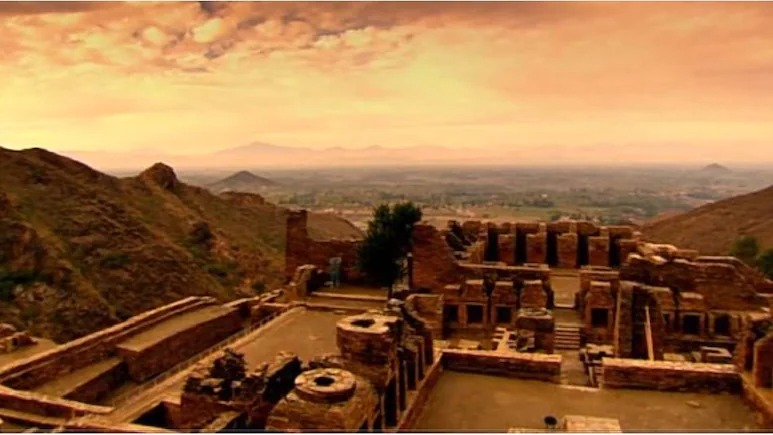
New Delhi: Maritime historian Nick Collins has challenged the long accepted view that Mesopotamia was the cradle of civilisation, arguing instead that the Indian subcontinent was the world’s earliest centre of advanced urban development, trade and innovation.
Drawing on decades of research into ancient maritime trade and commercial networks, Collins contends that the Indus Sarasvati civilisation developed highly organised cities, sophisticated manufacturing and extensive trading systems long before similar achievements were recognised elsewhere. He believes the conventional historical narrative places undue emphasis on Mesopotamia because it was excavated earlier by European archaeologists, while major discoveries in the Indus Valley came much later.
According to Collins, the Indus Sarasvati civilisation featured hundreds of settlements with planned streets, standardised bricks and weights, advanced drainage systems and thriving industries. He argues that these features demonstrate a level of urban planning and organisation unmatched in much of the ancient world at the time.
A key element of his argument is the archaeological site of Lothal in Gujarat, which he describes as an advanced dockyard capable of supporting large scale maritime trade. Collins believes its infrastructure reflects a sophisticated seafaring tradition that connected the Indian subcontinent with distant civilisations through regular commercial exchanges.
The historian also revisits the long debated Aryan migration theory, arguing that the builders of the Indus cities were indigenous and had established an advanced civilisation before later population movements into the region. While acknowledging that modern genetic studies identify steppe ancestry entering South Asia, he maintains that these migrations did not create the Indus civilisation.
Collins further points to archaeological evidence such as Indian carnelian beads, cotton, timber, merchant seals and stone anchors found in Mesopotamia, suggesting sustained trade between the two regions. References in Mesopotamian records to Meluhha, widely believed to refer to the Indus civilisation, and the existence of interpreters for its language, are presented as evidence of regular commercial links.
Although several of Collins’ conclusions remain subjects of academic debate, his research has reignited discussion over the origins of civilisation and the role of ancient India in shaping early human history.
Sorry, there was a YouTube error.