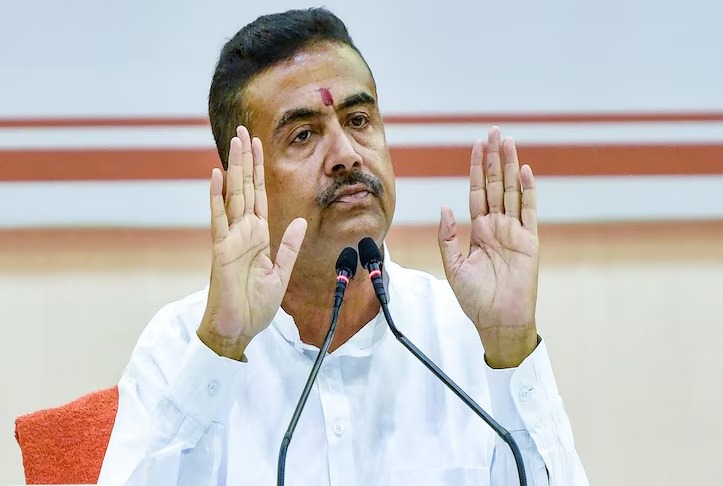
New Delhi: A political and social debate has erupted in West Bengal after Chief Minister Suvendu Adhikari made the singing of Vande Mataram mandatory in all schools and madrasas across the state.
Under the new government directive, students are required to sing the full national song during morning assemblies. The decision, one of the first major policy announcements of the new administration, has drawn both support and criticism.
The All India Muslim Personal Law Board has strongly objected to the order, calling for its immediate withdrawal. The organisation has alternatively sought an exemption for Muslim students, arguing that forcing students to recite any song or text that conflicts with their religious beliefs could violate their fundamental rights.
Responding to the criticism, Adhikari defended the policy and asserted that respect for national symbols is essential. He said that anyone living in India should honour both Vande Mataram and the national anthem, Jana Gana Mana, as well as national occasions such as Republic Day and Independence Day. The chief minister described the move as part of India’s cultural heritage and maintained that the national song should be sung by all students.
Union Minister Kiren Rijiju also backed the decision, stating that Vande Mataram belongs to the entire nation and should not be viewed through a political or religious lens.
The issue has also sparked discussion in Kerala. Congress MP Shashi Tharoor recently questioned the practice of playing all five verses of Vande Mataram at the beginning and end of official events. While reaffirming respect for the national song, he argued that requiring the complete version at every function was unnecessary and placed an undue burden on audiences.
His remarks drew criticism from Rajeev Chandrasekhar, who accused the Congress of aligning with organisations opposed to the move and warned against extending objections to other national symbols.
Written by Bankim Chandra Chatterjee in the 1870s, Vande Mataram was officially adopted as India’s national song in 1950. The debate over its mandatory recitation continues to fuel discussion on the balance between national identity, cultural traditions, and individual religious freedoms.
Sorry, there was a YouTube error.