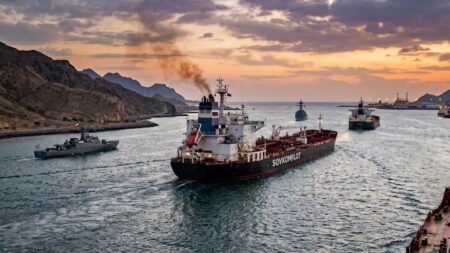
New Delhi: Even as the Strait of Hormuz remains severely disrupted by the conflict involving Iran, Indian vessels have continued to navigate one of the world’s most strategically important maritime corridors, helping safeguard the country’s energy and essential commodity supplies.
The Strait of Hormuz, located between Iran and Oman, carries nearly one fifth of the world’s oil and natural gas shipments. Since the outbreak of hostilities on February 28, shipping activity through the narrow waterway has been heavily affected, creating concerns over global energy security and rising fuel costs.
At an inter-ministerial briefing, officials from India’s shipping sector revealed that a carefully coordinated strategy has enabled Indian-linked vessels to continue operating through the high-risk zone. While declining to disclose operational details, officials said coordination is being carried out through the Ministry of External Affairs, with priorities determined jointly by ministries responsible for petroleum, natural gas and fertilisers.
According to officials, the government continuously evaluates cargo requirements and vessel movements to ensure that critical imports reach India despite the challenging security environment. The approach has helped maintain the flow of essential commodities while minimizing disruptions.
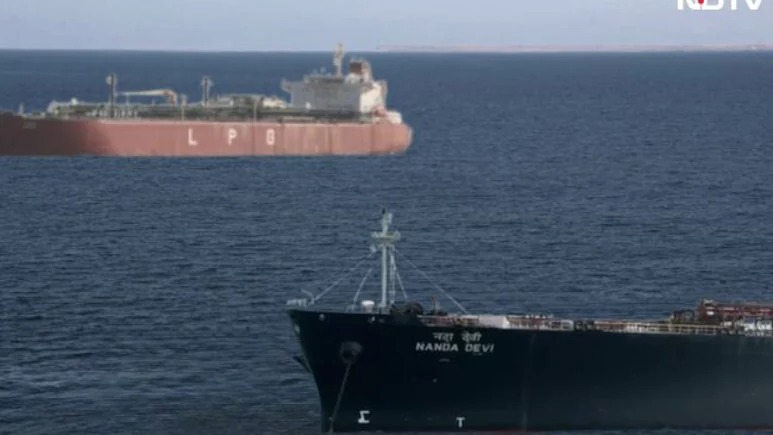
India currently has around 13 Indian-flagged vessels operating in the Strait of Hormuz region. These include crude oil tankers, an LPG carrier, container ships, bulk carriers, a chemical tanker and a dredger. Several Indian-linked vessels have successfully crossed the waterway since the conflict began, demonstrating the country’s ability to sustain maritime trade despite heightened risks.
Officials also addressed concerns regarding publicly available ship-tracking platforms, which allow vessel movements to be monitored in real time. While acknowledging that such data is accessible through commercial subscriptions, they noted that the information has also proven useful for monitoring maritime traffic and coordinating logistics.
The continued movement of Indian vessels is particularly significant because the Strait remains one of the world’s most sensitive shipping routes. Although active fighting subsided following the April 9 ceasefire, maritime traffic through the corridor has not fully returned to normal, with many international operators remaining cautious about sending ships through the region.
India’s ability to maintain shipping operations through Hormuz highlights the importance of coordinated diplomatic and logistical planning in protecting the country’s energy security during periods of international instability.
Sorry, there was a YouTube error.