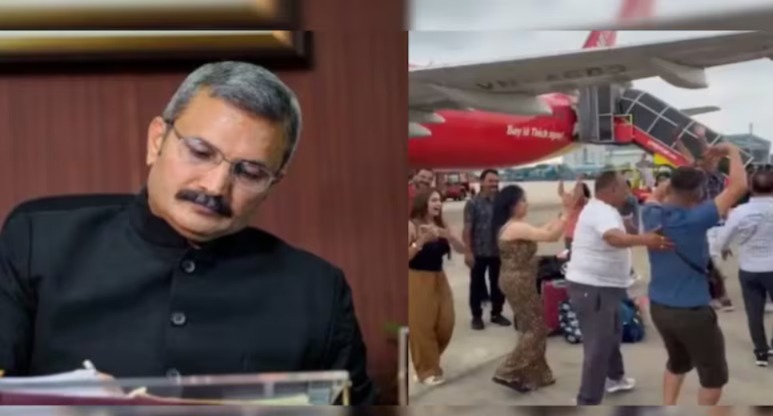
New Delhi: Senior IPS officer Arun Bothra has sparked a debate on social media after expressing concern over the conduct of some Indian tourists abroad, warning that inappropriate behaviour could damage India’s reputation and lead to stricter visa policies for Indian citizens.
In a post on X, Bothra, who serves as Additional Director General of Police (CID Crime) and Transport Commissioner in Odisha, said holding an Indian passport carries responsibilities alongside rights. He urged travellers to respect local laws, maintain public decorum and act in a manner that reflects positively on the country.
“Having an Indian passport is not just a right. It also comes with the responsibility to respect local laws, behave properly in public, and protect the country’s image,” he wrote.
The officer went a step further, suggesting that individuals whose actions abroad seriously tarnish India’s image should face consequences. In severe cases, he proposed that temporary restrictions on foreign travel could be considered as a deterrent.
Bothra’s remarks came in response to a discussion about viral videos showing Indian tourists filming reels, dancing or performing attention-grabbing acts in public spaces overseas. According to him, such incidents can create negative impressions among host countries and affect how Indian travellers are perceived.
Responding to a user who questioned why Indians should care about foreign opinions, Bothra clarified that his concern was practical rather than symbolic.
He argued that repeated incidents involving disruptive behaviour could contribute to tighter scrutiny of Indian visitors and potentially tougher visa regulations. Referring to recent policy changes in some countries, he said such developments should be viewed as a warning sign.
“I just don’t want people in host countries to look at us nervously, wondering which one of us will suddenly start dancing in a supermarket to make a reel,” he remarked.
The comments triggered varied reactions on social media. While many users agreed that tourists should be mindful of local customs and public behaviour, others argued that isolated incidents should not define an entire nationality. Some also contended that visa policies are influenced more by economic and security considerations than by individual acts of poor behaviour.
The discussion has reignited a broader debate on responsible tourism and how travellers represent their countries when abroad.