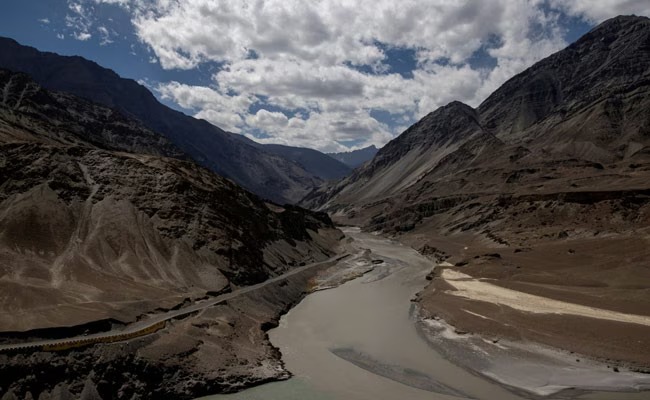
NEW DELHI: India has firmly rejected China’s objections to its decision to standardise the names of 28 strategic locations and geographical features in Ladakh, reiterating that the Union Territory is an integral and inalienable part of the country.
The move, formalised on October 2, includes several strategically important locations along the Line of Actual Control (LAC), including Gogra and Hot Spring. The locations have been incorporated into the official Survey of India map as part of efforts to improve geographical identification, administrative clarity and public awareness of the sensitive border region.
India’s Ministry of External Affairs maintained that officially recording these locations would help ensure their accurate recognition. It also reiterated that objections from China would not alter India’s established position on Ladakh’s territorial status.
Gogra and Hot Spring were among the major friction points during the military standoff between Indian and Chinese forces in eastern Ladakh in 2020. Both locations remain significant in the context of border management and patrolling arrangements along the LAC.
The 28 locations identified by India include high altitude peaks, mountain passes, glaciers, valleys, rivers and other geographical features. The list includes Alisha Giri, Brangsa, Chapchingal Pass, Kanishka Peak, Karun Pir, Kuksel, Martand Giri, Parpik Glacier, Skamri Glacier, Shachmirik Pass, Shkorga Valley and Zorawar Peak.
Other locations include Dehra Compass, Drak Karpo, Jolmori, Kumarayana Point, Panglung, Rinchen Zangpo, Sakyasri Giri, Guru Rinpoche, Shamal Lungpa, Yangpa River, Marpa Lotsava Ri, Milarepa Kangri, Shiva Ri and Maheshwara Ri.
China opposed the move, maintaining that it did not recognise Ladakh as a Union Territory established by India and disputing New Delhi’s authority to assign standardised names to the locations. Beijing also asserted its territorial claims over areas along the western sector of the India China boundary.
India’s decision reinforces its official geographical records and administrative position amid continuing differences over the disputed border.
Tensions between the two countries escalated sharply in June 2020 following a deadly confrontation in the Galwan Valley. Twenty Indian soldiers and four Chinese soldiers were reported killed in the clash, marking the first fatal military confrontation between the two sides in decades.
Subsequent military and diplomatic negotiations led to disengagement at several friction points, although wider boundary differences remain unresolved. India and China continue to monitor developments along their approximately 3,500 kilometre disputed frontier, known as the Line of Actual Control.
Sorry, there was a YouTube error.