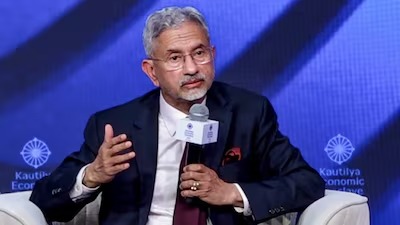
NEW DELHI: External Affairs Minister S. Jaishankar has said India must assess its relationship with the United States in the context of Washington’s changing global approach, emphasising that the two countries share a strong strategic partnership rather than a formal military alliance.
His remarks come amid continuing differences between New Delhi and Washington over tariffs, trade negotiations and other bilateral issues. Despite these challenges, both countries continue to engage on areas of mutual interest, including energy cooperation, regional security and broader strategic priorities.
Jaishankar said the United States had changed the way it engages with other countries, making it necessary for governments to reassess their bilateral relationships. He stressed that this shift was part of a wider international development rather than a challenge faced by India alone.
Jaishankar drew a distinction between India’s strategic partnership with Washington and the formal alliances the United States maintains with certain countries. He explained that India’s relationship with the US was built on cooperation in areas where their interests overlap, without the obligations associated with a formal alliance.
He noted that the two countries had spent more than two decades identifying common priorities and developing cooperation around them. According to Jaishankar, the changing international environment had not fundamentally altered this approach.
India’s position reflects its longstanding emphasis on strategic autonomy, allowing New Delhi to cooperate with Washington while retaining the freedom to make independent decisions on international and domestic matters.
Addressing trade tensions, Jaishankar pointed to Washington’s changing approach to tariffs, describing the issue as part of a broader effort by the United States to strengthen domestic manufacturing and change the terms governing access to its economy.
The evolving tariff policy has added complexity to India US trade negotiations, with both countries seeking arrangements that protect their economic interests while expanding commercial cooperation.
For India, the priority remains finding common ground on market access and manufacturing while ensuring that domestic industries and economic objectives are adequately protected.
The remarks come ahead of US Secretary of State Marco Rubio’s planned visit to India from October 17 to 22. Discussions are expected to cover bilateral strategic cooperation, regional and global developments, and opportunities to strengthen energy ties.
The visit is taking place at a time when both countries are seeking progress on trade negotiations while managing disagreements over tariffs and other policy matters. It could provide an opportunity to advance cooperation in areas where their interests converge.
Jaishankar’s latest comments follow his assessment that the international order is undergoing a significant transformation, shaped by changes in American foreign policy and China’s growing influence.
He has also highlighted how countries are increasingly using economic and political leverage to advance their interests despite continued global interdependence.
India’s approach, he indicated, will remain centred on strengthening partnerships where interests align while preserving its ability to navigate an increasingly competitive international environment independently.
Sorry, there was a YouTube error.