


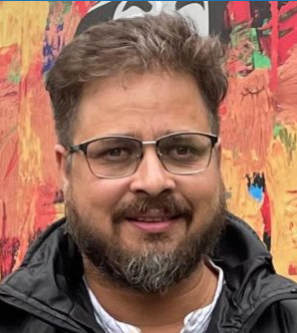
The Maharashtrawadi Gomantak Party (MGP) wants to have its cake and eat it too. It wants to remain an ally of the Bharatiya Janata Party (BJP), enjoy the benefits of being in government and simultaneously stake claims to constituencies where local BJP leaders have their own political ambitions. The question is not whether MGP has the right to contest elections. It certainly does. The question is whether an alliance can survive when one partner appears determined to dictate terms to the other.
The latest political signals from MGP have raised precisely this question. With MGP leader Sudin Dhavalikar expressing his desire to contest from Ponda, a seat left vacant following the death of former minister Ravi Naik, the party appears to be preparing to negotiate from a position of strength. Its ambitions are reportedly not confined to Ponda. Priol, Shiroda and even Chief Minister Dr Pramod Sawant’s Sanquelim constituency have figured in the discussion surrounding its electoral calculations.
There is nothing unusual about a political party seeking more seats before an election. Every party wants to expand its footprint. But political ambition must be balanced with political reality, particularly when the party in question is a junior partner in an alliance. If MGP believes it can claim constituencies where BJP leaders have established their presence without adequately considering the interests of the local leadership, it risks turning an electoral partnership into a contest for political survival.
MGP State President Deepak Dhavalikar has maintained that the alliance with the BJP is on track. Yet Sudin Dhavalikar’s stated interest in Ponda raises an obvious question: on what basis is the party making its claim? Is it relying on a formal understanding with the BJP, or is it testing how much pressure the national leadership can exert on the state unit?
The distinction matters. An alliance is built on negotiations, mutual respect and an understanding of each partner’s political strength. It cannot operate on the assumption that one party can simply demand constituencies and expect the other to accommodate it.
BJP Goa president Damu Naik has so far declined to comment on the issue. The silence may be politically understandable, but it does not resolve the underlying tension. Meanwhile, warnings from the Chief Minister’s camp against MGP attempting political misadventures suggest that the matter is not as settled as the public assurances from the MGP leadership would have people believe.
The BJP’s local leadership has every reason to be concerned. Party workers spend years building their organisation, strengthening their grassroots networks and establishing relationships with voters. When an alliance partner stakes a claim to a constituency, those efforts cannot simply be brushed aside to accommodate a political arrangement negotiated elsewhere.
Sudin Dhavalikar’s reported proximity to senior BJP leader Nitin Gadkari adds another dimension to the debate. A strong relationship with the national leadership is a political asset. However, such access should not become a means of bypassing or pressuring the state leadership. The BJP in Goa cannot expect its local leaders to remain silent while decisions affecting their political futures are negotiated over their heads.
The experience of the 2022 Assembly elections is also worth recalling. The BJP and MGP did not contest that election under a formal pre-poll alliance. Their understanding emerged after the results, when political circumstances created an opportunity for cooperation. That history demonstrates that the relationship between the two parties has often been shaped by electoral arithmetic rather than an unshakeable commitment to a common political programme.
This brings us to the larger question of ideology. On paper, the BJP and MGP share several political positions. But ideological compatibility alone does not explain the MGP’s political journey. The party has demonstrated a willingness to work with different political formations when circumstances have favoured it. Between 2007 and 2012, Sudin Dhavalikar served as a minister in the Congress-led government. The party’s political choices have therefore not always been dictated by ideological proximity to the BJP.
There is nothing inherently wrong with a regional party changing alliances. Regional parties have their own constituencies, priorities and survival strategies. But voters are entitled to ask whether such changes are driven by a coherent political vision or simply by the pursuit of office.
For MGP, participation in government appears to be a central political objective. That may be a legitimate strategy, but it also exposes the party to criticism when its electoral ambitions seem to outweigh questions of principle, consistency and partnership.
The BJP, too, must decide what kind of alliance it wants. If it values MGP’s support, it must negotiate fairly and recognise the smaller party’s legitimate aspirations. But it must also protect the interests of its own workers and leaders. An alliance cannot become a mechanism through which local leadership is repeatedly asked to surrender ground to keep a partner satisfied.
Ultimately, Sudin Dhavalikar is entitled to seek an electoral contest in Ponda. MGP is entitled to demand seats. But neither entitlement automatically translates into a right to a BJP-held constituency or one where the BJP has strong political interests. Such claims must be settled through negotiation, not pressure.
The real test of the MGP-BJP relationship will be whether both parties can distinguish political ambition from political entitlement. If MGP wants to remain an ally, it must recognise that partnership involves compromise. And if the BJP wants to retain its credibility among its own cadre, it cannot allow the interests of local leaders to be sacrificed merely to accommodate a politically assertive ally.
The question, therefore, is not whether MGP cares about its own electoral future. Every party does. The question is whether it cares enough about the partnership to respect the interests of the BJP leadership in Goa.
If every constituency becomes a bargaining chip and every alliance a route to power, the ideological common ground between the two parties will count for very little. In politics, alliances may be built on convenience, but they cannot endure indefinitely without trust. And trust is precisely what this seat-sharing tussle threatens to undermine.
