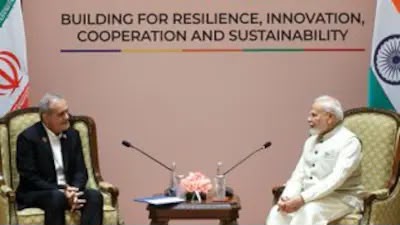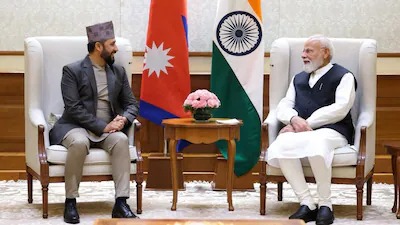
New Delhi: Prime Minister Narendra Modi on Wednesday reaffirmed India’s commitment to strengthening its long-standing relationship with Nepal during a meeting with Rabi Lamichhane, chairman of Nepal’s Rastriya Swatantra Party.
The meeting, attended by External Affairs Minister S Jaishankar, National Security Advisor Ajit Doval and Foreign Secretary Vikram Misri, reflected the growing engagement between New Delhi and Nepal’s new political leadership.
Following the discussions, Modi highlighted Nepal’s importance under India’s Neighbourhood First policy and reiterated that Kathmandu remains a key partner in the region. He welcomed Lamichhane’s commitment to working closely with India and expressed confidence that both countries could further deepen cooperation for a shared and prosperous future.
Lamichhane’s visit to India has featured a series of high-level meetings aimed at enhancing political, economic and developmental cooperation between the two neighbours.
A day earlier, the Nepalese leader met Union Home Minister Amit Shah in New Delhi. During the interaction, both sides emphasized the importance of strengthening the special relationship between India and Nepal. Shah also conveyed his congratulations on the party’s electoral success and extended best wishes to Nepal’s new government.
Lamichhane also held discussions with Jaishankar, focusing on expanding cooperation in development projects and reinforcing the multifaceted relationship shared by the two countries. The talks underscored the significance of people-to-people connections, economic partnerships and cultural ties that have historically linked India and Nepal.
Speaking on the broader relationship, Foreign Ministry spokesperson Randhir Jaiswal noted that India and Nepal share a comprehensive partnership encompassing government-to-government engagement, cultural exchanges and close people-to-people interactions. He said regular contacts between political leaders and parties from both countries play an important role in strengthening mutual understanding and cooperation.
The latest round of engagements signals a renewed effort by both nations to build on their historic ties and expand collaboration across multiple sectors, reinforcing a partnership that remains central to regional stability and development.