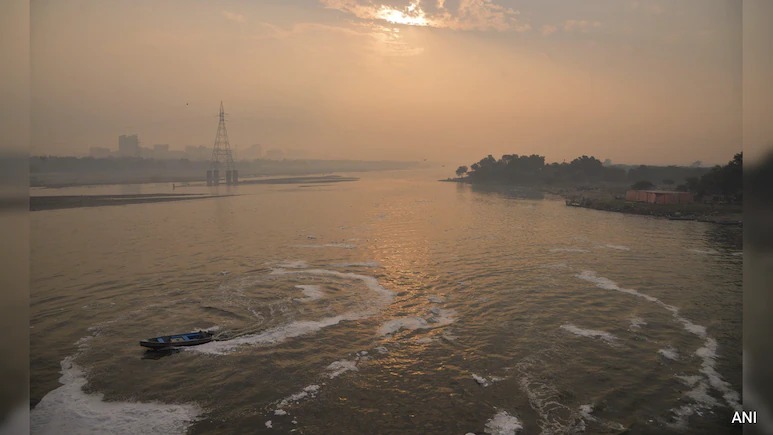
New Delhi: The Yamuna continues to remain heavily polluted across major stretches flowing through Delhi despite the capital recording significantly above normal rainfall this year, according to the latest findings released by the Delhi Pollution Control Committee.
The latest “Water Quality Status of River Yamuna” report, based on water samples collected on April 7, 2026, shows that while a few sections of the river recorded slight improvement compared to last year, overall pollution levels remain far beyond permissible limits in most downstream areas.
Delhi experienced one of its wettest Aprils in recent years, with data from the India Meteorological Department showing that the city received nearly 147 percent above normal rainfall by mid April. However, the increased rainfall and water flow have failed to significantly improve the river’s ecological condition.
The cleanest stretch of the Yamuna was recorded at Palla, where the river enters Delhi. This was also the only location where dissolved oxygen levels met the minimum standard required to sustain aquatic life. The dissolved oxygen level at Palla stood at 5.2 mg/l, while the Biological Oxygen Demand improved slightly compared to last year.
However, the river’s condition deteriorated sharply as it moved deeper into the city.
At Wazirabad, pollution indicators remained above safe limits despite minor improvement in oxygen levels. Sewage contamination also increased considerably. The situation became far more alarming at ISBT Bridge, ITO Bridge and Nizamuddin Bridge, where dissolved oxygen levels remained completely absent and Biological Oxygen Demand levels stayed critically high.
Further downstream, stretches such as Hindon Cut, Okhla Barrage and Asgarpur continued to record some of the worst pollution levels in the river. At Asgarpur, faecal coliform contamination rose to nearly 3.1 lakh MPN per 100 ml, far exceeding safe standards.
Environmental experts have identified untreated sewage discharge, industrial waste and inadequate drainage management as the primary reasons behind the continuing crisis. According to pollution control standards, dissolved oxygen should remain above 5 mg/l and Biological Oxygen Demand should stay below 3 mg/l, benchmarks that most stretches inside Delhi continue to violate by a massive margin.
The findings have once again highlighted the limited impact of repeated cleanup drives and underscored the urgent need for stronger sewage treatment systems, stricter industrial monitoring and long term river restoration efforts to revive the Yamuna’s ecological health.
Sorry, there was a YouTube error.