New Delhi: The Supreme Court has asked the Centre to ensure that a person who respectfully declines to sing Vande Mataram on grounds of conscience is not subjected to penal consequences.
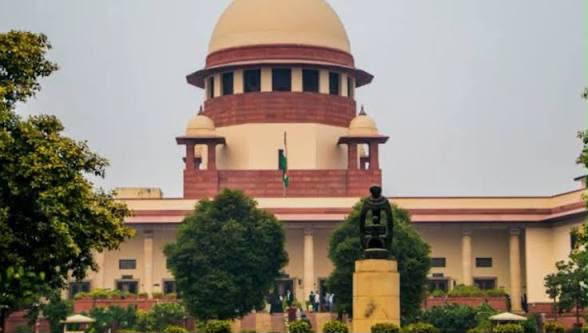
A bench headed by Chief Justice of India Surya Kant, along with Justices Joymalya Bagchi and V Mohana, was hearing a petition challenging provisions that extend legal protection to the national song and prescribe penalties for disrupting its singing. The petition was filed by Carnatic vocalist T M Krishna.
During the hearing, the court referred to its 1986 judgment in Bijoe Emmanuel vs State of Kerala, in which it protected schoolchildren who respectfully declined to sing the national anthem because of their beliefs. The bench indicated that the same legal principle should apply to conscientious objectors under the amended law.
The court clarified that it was not examining which version or number of stanzas should constitute the national song. It also said determining national sentiments associated with Vande Mataram was a matter for the democratic process. The focus, according to the bench, would be whether individuals who object to singing on grounds of conscience or religious belief remain protected from punishment.
The petition challenges Section 3 of the Prevention of Insults to National Honour Act, 1971, following its 2026 amendment. The amended provision provides for imprisonment of up to three years, a fine, or both for intentionally preventing the singing of the national anthem or national song or disturbing an assembly engaged in such singing.
The petitioner has also questioned government directions requiring the rendition of all six stanzas of Vande Mataram and the arrangement under which the national song would precede the national anthem when both are performed.
During the hearing, arguments also became heated between senior advocate S Muralidhar, representing Krishna, and Solicitor General Tushar Mehta over remarks concerning the legislative process. The bench chose not to take note of the exchange.
The court’s observations put the protection of freedom of conscience at the centre of the legal challenge while leaving the question of the national song’s prescribed form to the appropriate authorities.