New Delhi: US President Donald Trump has backed the India-Middle East-Europe Economic Corridor as a potential way to reshape energy and trade routes across the region and reduce dependence on infrastructure linked to Iran.
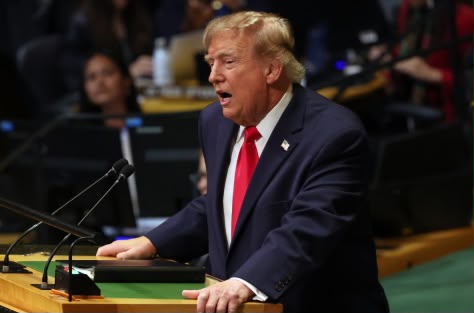
Speaking at a meeting with leaders of the Gulf Cooperation Council on the sidelines of the United Nations General Assembly, Trump said recent attacks on commercial shipping in the region had highlighted the need to move Middle East energy infrastructure away from areas vulnerable to disruption.
He pointed to the India-Middle East-Europe Economic Corridor, along with other routes for transporting oil, as part of the broader effort to develop alternative energy networks and improve regional connectivity.
The India-Middle East-Europe Economic Corridor was unveiled in September 2023 during the G20 Summit in New Delhi. The proposed network is designed to connect India with the Arabian Gulf and then link the Gulf region with Europe through a combination of rail and maritime routes.
The project is planned around two main sections. The eastern corridor would connect India to the Arabian Gulf, while the northern corridor would extend from the Gulf to Europe. A railway network is expected to provide an additional route for moving goods between the participating regions, complementing existing shipping and road networks.
The broader plan also includes infrastructure for energy and digital connectivity. Proposals include electricity and data cables, as well as a pipeline intended to support the transportation of clean hydrogen.
The corridor is intended to strengthen trade links, reduce transportation barriers and improve connectivity between South Asia, the Middle East and Europe.
Trump also issued another warning to Iran during the meeting, saying Washington had placed significant financial pressure on Tehran and cautioning that the situation could reach a point where further action would become unavoidable.
He also referred to the US military operation against Iranian nuclear facilities last year, claiming that the country’s nuclear programme had suffered extensive damage.