New Delhi: India has firmly ruled out any involvement of third parties in resolving its long-standing boundary dispute with Nepal, reiterating that the issue should be addressed exclusively through existing bilateral mechanisms.
The response came after Nepal’s Prime Minister Balendra Shah suggested that both China and the United Kingdom could play a role in discussions concerning the disputed border regions of Lipulekh, Limpiyadhura and Kalapani. The areas remain a point of contention between the two neighbours, with India maintaining that they form part of the state of Uttarakhand.
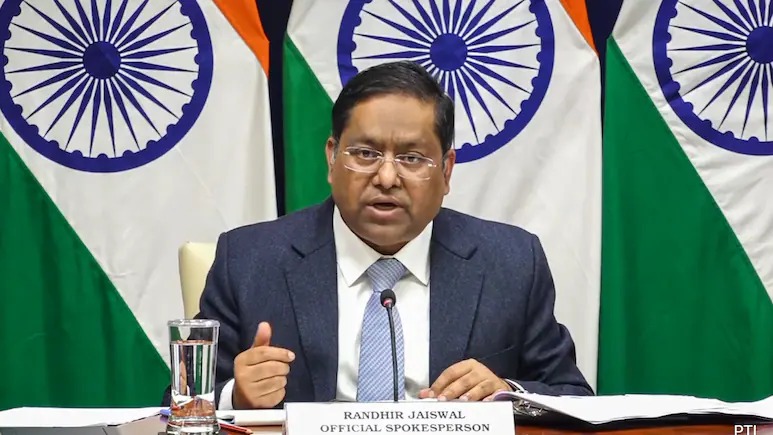
Addressing the matter, External Affairs Ministry spokesperson Randhir Jaiswal said India and Nepal already have established bilateral mechanisms to handle all aspects of boundary-related issues. He emphasized that there is no place for any third party in what remains a bilateral matter between the two countries.
India also noted that nearly 98 percent of the India-Nepal border has already been demarcated. According to the government, some unresolved segments remain due to changes in the course of the Gandak River, along with issues involving cross-border occupation and encroachment in certain demarcated areas. These locations are currently being jointly mapped by both sides.
Speaking in Nepal’s Parliament, Shah argued that since aspects of the dispute date back to the colonial era, the United Kingdom should also be involved in discussions. He added that Nepal has maintained contact with both India and China regarding the issue and suggested that historians, surveyors and other experts could assist in finding a solution.
The Nepalese leader also sparked controversy by stating that Nepal had, in some instances, encroached upon Indian territory. His remarks drew criticism from opposition lawmakers, who demanded evidence for the claim or its withdrawal from the parliamentary record.
Following the comments, Nepal’s Foreign Ministry clarified that Shah’s observations referred to issues involving no-man’s land encroachments and cross-border occupation rather than any new territorial claims.
The latest exchange highlights the continuing sensitivity of the border issue, even as both countries maintain diplomatic engagement aimed at resolving outstanding differences through dialogue.
Sorry, there was a YouTube error.