Team Goemkarponn
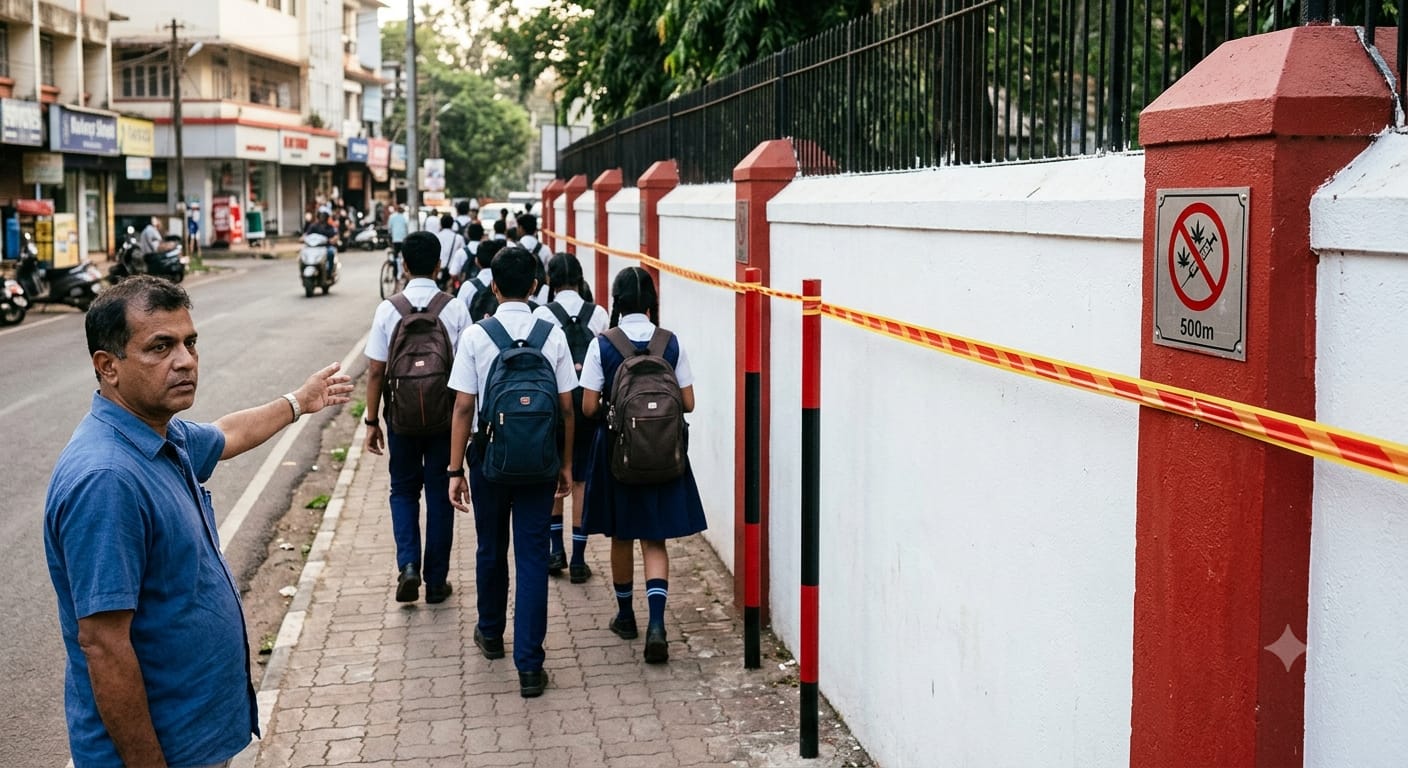
PANAJI: The Education Department’s directive to schools across Goa to maintain a 500-metre drug-free zone around their campuses has triggered strong opposition, with Congress leaders questioning whether the measure can effectively address the State’s growing drug menace.
The Directorate of Education has directed schools to ensure that the area within a 500-metre radius of their campuses remains free from drugs, following recommendations from the Narcotics Control Bureau. School heads have been asked to take necessary steps for immediate compliance.
However, opposition leaders have questioned the practicality of placing responsibility on educational institutions to prevent drug activity in areas surrounding schools, arguing that enforcement against drug trafficking and peddling must remain the responsibility of the competent law-enforcement agencies.
Goa Pradesh Congress Committee President Girish Chodankar said the Government should focus on making the entire State drug-free instead of restricting its approach to designated zones.
“Protecting our children from drugs is non-negotiable. But the Government must answer a simple question—why only 500 metres? What happens at 501 metres?” Chodankar questioned.
He said the drug menace cannot be addressed by drawing geographical boundaries around schools and called for action against the networks involved in the supply and distribution of drugs.
“Don’t draw a 500-metre circle around the problem. Destroy the drug network across Goa,” Chodankar said.
Chodankar further questioned whether the directive risks creating an impression of action while placing responsibilities on school authorities that they are not equipped or legally empowered to discharge.
He said children require protection not only around schools but also in their neighbourhoods, playgrounds, colleges, villages and cities.
Congress leader Amit Patkar also criticised the directive, questioning what enforcement powers school heads possess to deal with drug peddlers operating in the vicinity of educational institutions.
“What is the jurisdiction of a headmaster? What action can a headmaster take? What about outside 500 metres? Is drug sale allowed there?” Patkar questioned.
Patkar said the spread of drugs from towns to the hinterland was a matter of serious concern and argued that the focus should be on strengthening enforcement rather than expecting school authorities to tackle a criminal network.
Velim MLA Venzy Viegas said Goa needs a comprehensive policy to eliminate drugs across the State rather than limiting the response to 500-metre zones around educational institutions.
“We demand Goa to be a drug-free state, not merely a 500-metre drug-free zone around campuses and educational institutions,” Viegas said.
Velim MLA Cruz Silva said the Government must demonstrate political will and strengthen enforcement agencies if it wants to dismantle the drug network.
“Drugs are illegal across Goa. School heads cannot police neighbourhoods or arrest peddlers. Give enforcement agencies the resources and responsibility to act,” Silva said.
The opposition has maintained that while protecting school campuses and students from drug-related activity is necessary, a radius-based approach alone cannot address the wider supply chain. The leaders have called for sustained enforcement, identification of drug networks and greater accountability of agencies responsible for tackling the illegal drug trade.