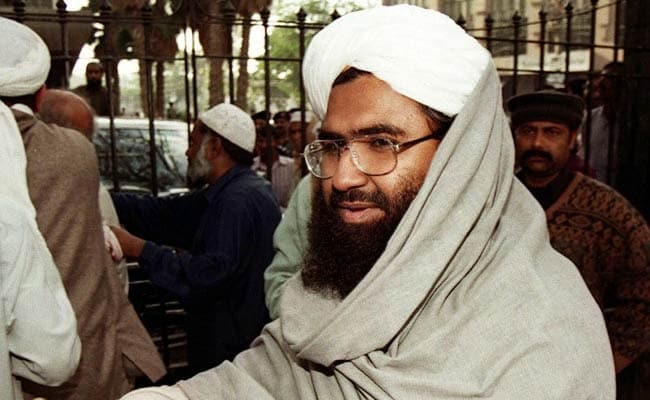
New Delhi: India has dismissed Pakistan’s decision to increase the reward for information leading to the arrest of Jaish-e-Mohammed chief Masood Azhar, calling the move a “gimmick” and a “phoney announcement”.
External Affairs Ministry spokesperson Randhir Jaiswal said Pakistan should take concrete action against terror groups and individuals rather than make announcements that India considers ineffective.
“Such gimmicks and attempts at hoodwinking by Pakistan are not new,” Jaiswal said, adding that New Delhi had seen similar announcements in the past. He said Pakistan should demonstrate action instead of making what he described as hollow declarations.
Pakistan’s Federal Investigation Agency has included Azhar in its 2026 Red Book of most-wanted high-profile terrorists and increased the reward for information leading to his arrest from PKR 50 lakh to PKR 70 lakh. The reward was first announced in 2021.
The development comes ahead of the Financial Action Task Force’s next plenary in October. Pakistan was removed from the FATF grey list in 2022 after completing commitments under action plans relating to money laundering and terrorist financing. The latest move has drawn attention because of the timing of the upcoming review, although claims about its specific purpose remain attributed assessments rather than an officially stated reason.
Where Is Masood Azhar?
Azhar’s whereabouts remain disputed. Pakistan has maintained that he is not in the country and has claimed that he moved to Afghanistan, while India has rejected that position.
The Jaish-e-Mohammed chief was designated by the United Nations Security Council as a terrorist in May 2019. The United States also has a $10 million reward for information leading to his arrest or conviction.
Azhar was released from an Indian prison in December 1999 as part of a deal to secure the release of passengers and crew members of hijacked Indian Airlines flight IC-814. The aircraft had been hijacked after departing Kathmandu and was eventually taken to Kandahar.
He founded Jaish-e-Mohammed in 2000. The organisation has been linked to several major attacks in India, including the 2001 Parliament attack, the 2016 Pathankot airbase attack and the 2019 Pulwama bombing.
The issue remains a major point of contention between India and Pakistan, with New Delhi continuing to demand concrete action against individuals and organisations designated for terrorism.
Sorry, there was a YouTube error.