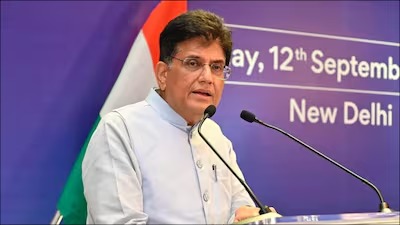
New Delhi: India will finalise and announce the details of its proposed Bilateral Trade Agreement with the United States only after Washington agrees to provide preferential tariff treatment compared with India’s key competitors, Commerce and Industry Minister Piyush Goyal said.
Goyal said negotiations have progressed significantly, but the final announcement will depend on the US offering India a competitive tariff advantage. He stressed that the agreement’s detailed text has not yet been made public.
The minister also maintained that India has protected its key economic interests during the negotiations. He said the government had consulted farmers, fishermen, micro, small and medium enterprises, workers, the handloom and handicrafts sectors and the automobile industry before finalising the first phase of the agreement.
According to Goyal, the pact represents only the first tranche of a broader engagement between the two countries, with further negotiations expected to continue.
India and the US have been working towards a wider trade agreement aimed at expanding market access and strengthening economic ties. A US trade delegation led by its chief negotiator visited India from June 1 to 4 for discussions covering goods trade, non tariff measures, customs procedures, trade facilitation and economic security.
The two countries had earlier announced a framework for an interim trade agreement in February. The framework is part of broader BTA negotiations launched by US President Donald Trump and Prime Minister Narendra Modi in February 2025.
The proposed agreement is expected to include additional market access commitments and measures aimed at building more resilient supply chains.
The negotiations have gained importance amid changes in US tariff policy. Washington imposed an additional 10 per cent tariff on several countries, including India, from July 24.
While the agreement has reportedly made substantial progress, its finalisation continues to depend on resolving tariff related issues. India’s latest position makes clear that securing preferential treatment over competing economies remains a key condition before the pact is formally concluded.
Sorry, there was a YouTube error.