New Delhi: The political face-off between the Congress and the BJP intensified as Rahul Gandhi renewed his challenge to Prime Minister Narendra Modi for a public debate, prompting sharp responses from Union Finance Minister Nirmala Sitharaman and the BJP’s ally Janata Dal (United).
The latest exchange followed Union Home Minister Amit Shah’s challenge to Gandhi to participate in a debate on issues including the Special Intensive Revision (SIR) of electoral rolls, Electronic Voting Machines (EVMs) and alleged infiltration. Shah had also offered to convene a special session of Parliament to discuss these matters.
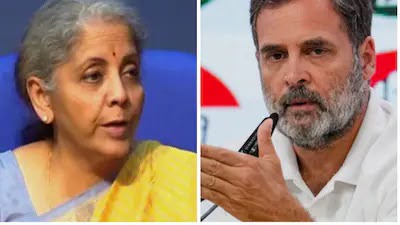
Sitharaman questioned why Gandhi was demanding a debate with the Prime Minister outside Parliament when the Lok Sabha already provided a platform for such discussions. She pointed out that Gandhi, as Leader of the Opposition, had the opportunity to raise these issues in the House.
She also questioned his approach towards parliamentary institutions, arguing that demanding answers should come with a willingness to listen to responses and face scrutiny. She urged him to present facts and participate in meaningful discussions within Parliament.
JD(U) national spokesperson Rajeev Ranjan Prasad also challenged Gandhi to accept Shah’s proposal. He said that if the Congress leader had faith in parliamentary democracy, he should bring all the issues he wanted to discuss to the proposed special session.
Prasad further referred to the Supreme Court proceedings concerning the Bihar SIR exercise, maintaining that the Election Commission had the legal authority to conduct the revision.
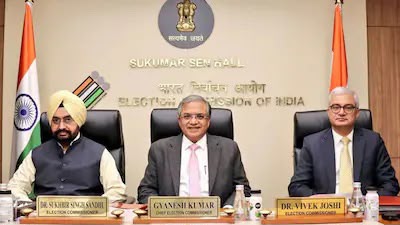
Meanwhile, the Congress countered Shah’s challenge by demanding the resignation of Chief Election Commissioner Gyanesh Kumar and suspension of the SIR exercise before any proposed debate.
Gandhi, however, renewed his challenge to Modi on social media, asking the Prime Minister to choose any venue for a discussion on allegations concerning nationalism and alleged connections with foreign forces.
He proposed that both leaders sit across a table, with the media and young people present, and suggested that the judge for the debate could be chosen by the Prime Minister.