New Delhi: Senior Congress leader Rahul Gandhi has admitted that the Congress party’s past failure to adequately address Dalit concerns contributed to the rise of regional caste-based parties and the erosion of the party’s support among Dalit communities.
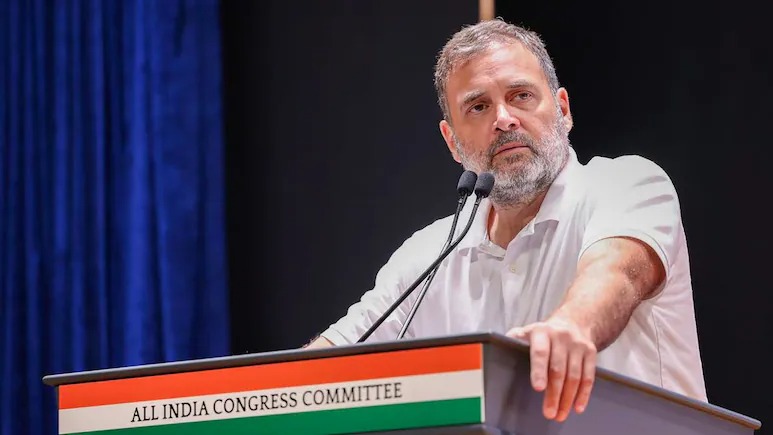
Speaking at a meeting of the Congress Scheduled Castes Department in New Delhi, Gandhi said that if the Congress had taken timely and effective steps for Dalits during the 1980s and 1990s, regional parties built around caste politics may not have gained strength. Though he did not mention any party by name, the remarks were widely seen as a reference to the Bahujan Samaj Party (BSP).
Gandhi reportedly praised BSP founder Kanshi Ram for successfully uniting Dalits and giving the community a sense of confidence and political identity. He also assured party workers that Dalits would now play a central role within the Congress organisation.
During the meeting, Gandhi accused the BJP of weakening regional parties while simultaneously undermining Dalit rights. He alleged that atrocities against Dalits were increasing and pledged that the Congress would strongly defend constitutional and social protections for marginalised communities. He also reiterated the party’s commitment to fulfilling the vision of Dr. B.R. Ambedkar.
The remarks are being viewed as part of the Congress party’s broader strategy to strengthen its support among Dalits and Other Backward Classes ahead of the Uttar Pradesh Assembly elections next year.
In recent years, Gandhi has consistently raised issues related to social justice, including demands for a caste census and concerns over constitutional protections. During the Lok Sabha elections, he frequently campaigned while carrying a copy of the Constitution, claiming it was under threat under the NDA government.
Last week, Gandhi visited his parliamentary constituency of Raebareli, where he unveiled a statue of Dalit freedom fighter Veera Pasi and addressed a Bahujan gathering, further signalling the party’s intensified outreach toward marginalised communities.