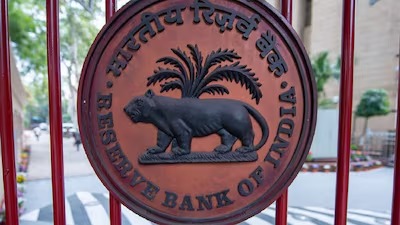
New Delhi: Ahead of the Reserve Bank of India’s upcoming monetary policy review, SBI Research has recommended that the central bank refrain from raising the repo rate despite global economic uncertainties and pressure on the Indian rupee. The report argues that targeted liquidity measures and short-term interest rate tools would be more effective in managing currency volatility without impacting broader economic growth.
In its assessment, SBI Research strongly opposed the idea of a repo rate hike, stating, “So should there be a repo rate hike? NO!” The report urged the RBI to maintain a data-driven approach and continue monitoring economic developments before making any major policy changes.
Drawing parallels with the measures adopted during the 2013 currency crisis, the report highlighted how the RBI had then increased the Marginal Standing Facility (MSF) rate by 200 basis points to 10.25 per cent while keeping the repo rate unchanged at 7.25 per cent. The strategy helped address exchange rate volatility without imposing widespread borrowing costs on the economy.
SBI Research suggested that the central bank could deploy tools such as “Operation Twist,” which involves influencing short-term and long-term interest rates differently. Under such a strategy, short-term rates may rise to support the currency, while long-term rates remain relatively lower to encourage investment and economic activity.
The report also noted that wider interest rate corridors could enhance interbank market activity and reduce dependence on central bank liquidity support.
On the growth front, SBI Research projected India’s real GDP growth at around 7.2 per cent for the fourth quarter of FY26, with full-year growth estimated at 7.5 per cent. For FY27, the report expects GDP growth to moderate to 6.6 per cent.
The recommendations come ahead of the Reserve Bank of India’s Monetary Policy Committee (MPC) meeting beginning on June 3. The six-member panel will review interest rates and the economic outlook before the policy decision is announced on June 5.
Sorry, there was a YouTube error.