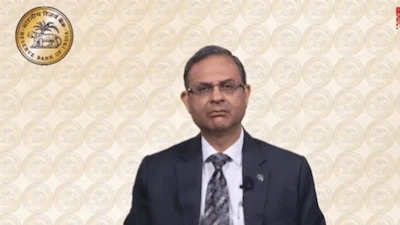
New Delhi: Reserve Bank of India Governor Sanjay Malhotra on Friday cautioned that the global economic outlook remains uncertain as escalating tensions in West Asia continue to disrupt supply chains, increase energy prices and create volatility across financial markets.
Announcing the latest decision of the Monetary Policy Committee, Malhotra said the ongoing geopolitical impasse in the region is exerting pressure on economic activity worldwide. According to him, rising energy costs and interruptions in global supply networks are emerging as significant concerns for policymakers and businesses alike.
He noted that several major central banks in advanced economies may be forced to adopt tighter monetary policies in response to renewed inflationary pressures. While global equity markets continue to draw support from optimism surrounding artificial intelligence and technological innovation, bond markets remain cautious due to concerns about inflation and debt sustainability.
The RBI Governor also highlighted increasing volatility in currency markets. He said investors seeking safe haven assets during periods of uncertainty have contributed to fluctuations in foreign exchange markets, with many emerging market economy currencies witnessing depreciation pressures.
Despite the challenging international environment, Malhotra expressed confidence in India’s economic resilience. He stated that the country entered the current phase of global turbulence with stronger economic fundamentals than during previous episodes of global instability. According to him, India is well positioned to withstand external shocks while minimising their impact on growth and financial stability.
On inflation, Malhotra said consumer price inflation remains below the RBI’s target despite global disruptions, as the transmission of international price shocks to domestic markets has been relatively limited so far. However, he cautioned that inflation could move closer to the upper end of the central bank’s tolerance range during the third quarter of the financial year before easing later as supply pressures moderate.
He also warned of potential second round inflationary effects through higher wage demands and inflation expectations, which could broaden price pressures across the economy. Additionally, uncertainties related to the southwest monsoon and possible El Niño conditions remain risks to the inflation outlook.
The Monetary Policy Committee decided to keep the repo rate unchanged at 5.25 per cent while maintaining a neutral policy stance, signalling a balanced approach as the central bank navigates an increasingly uncertain global environment.
Sorry, there was a YouTube error.