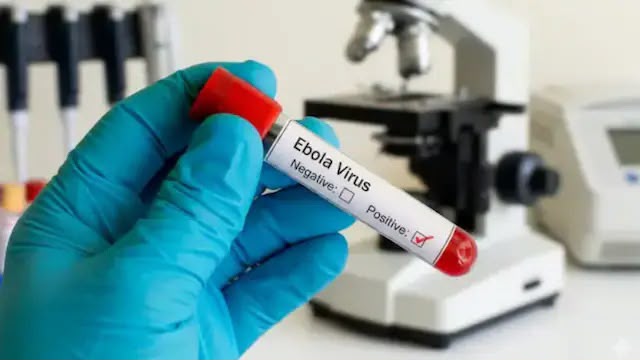
New Delhi: The Ebola outbreak in the Democratic Republic of the Congo (DRC) remains uncontrolled despite an overall decline in cases and deaths, with transmission patterns increasingly diverging between affected provinces.
The World Health Organisation (WHO) said the latest situation showed a significant geographic shift in transmission. While cases have declined in Ituri, which has remained the main centre of the outbreak, infections have increased sharply in neighbouring North Kivu.
Ituri accounts for nearly 80 per cent of confirmed cases, but infections there have been falling since mid August. Over the latest three week period, confirmed cases across the country declined by about 6 per cent, largely because of a 25 per cent reduction in Ituri.
North Kivu, however, recorded a rise of more than 76 per cent during the same period. The province has reported its highest incidence since the outbreak began and now accounts for roughly one third of new cases and more than one third of new deaths nationally.
Health authorities have warned that the improvement in Ituri should not be interpreted as an indication that the wider outbreak is ending. The differing trends have increased the need for stronger contact tracing, surveillance and other containment measures.
Researchers are also studying potential vaccines and treatments. The current outbreak is caused by Bundibugyo ebolavirus, for which no vaccine or specific treatment has yet received approval.
The Ervebo vaccine, approved for Zaire ebolavirus, is being administered in the DRC under special use and research protocols to assess whether it could provide protection against the current strain. By September 13, around 2,307 healthcare and frontline workers had received the vaccine.
Clinical studies are also examining experimental treatments and post exposure prevention. The WHO said 128 people had received investigational treatment or prophylaxis, including confirmed patients and high risk contacts.
According to the DRC government’s latest data through September 13, the outbreak has recorded 7,258 confirmed cases and 3,510 deaths across 62 health zones in seven provinces.
The outbreak has become the deadliest Ebola epidemic in the DRC’s history and the second largest recorded globally.