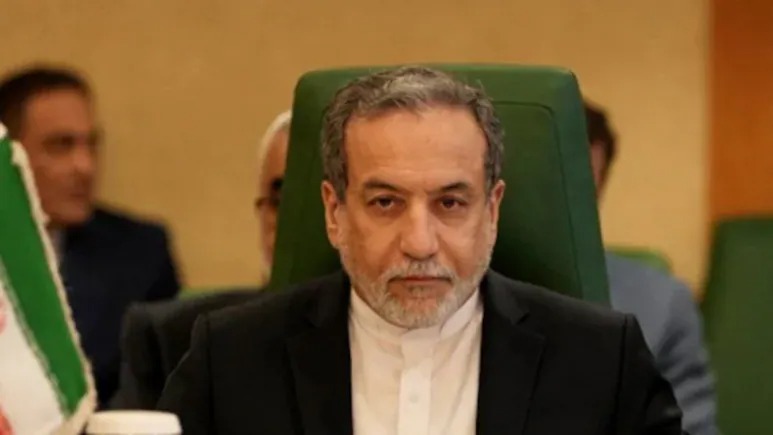
New Delhi: Iranian Foreign Minister Abbas Araghchi has described the immense pressure faced by Tehran’s negotiating team during talks with the United States, saying every discussion took place under the constant fear of military strikes.
Recalling his conversations with US Middle East envoy Steve Witkoff, Araghchi said he asked whether American negotiators had ever participated in talks believing the meeting could be bombed at any moment or spoken to their families wondering if it might be their final conversation. He said such fears had become a reality for Iranian officials because of what he described as persistent threats from the United States and Israel.
Araghchi maintained that Iran refused to compromise on its nuclear programme despite mounting pressure. He said Tehran rejected demands to completely halt uranium enrichment, insisting that negotiations could not succeed through threats or coercion. According to him, when diplomatic efforts failed to secure those demands, the conflict escalated into military confrontation.
The foreign minister also dismissed suggestions that military action could force political change in Iran. Comparing the situation with Venezuela, he argued that Iran’s political and governance structure is fundamentally different and cannot be destabilised by targeting a single leader or institution. He said the country’s decision making process is distributed across multiple institutions, making it resilient against external pressure.
His remarks come amid renewed hostilities between Iran and the United States despite earlier ceasefire efforts. Fresh military strikes have been reported in several parts of Iran, with explosions occurring in multiple cities as US forces continued operations targeting what they described as threats to commercial shipping in the Strait of Hormuz.
Iran has also announced retaliatory operations, including strikes on military facilities linked to the United States in the region. The latest escalation has heightened concerns over regional security, maritime trade through the Strait of Hormuz and the possibility of a broader conflict in West Asia as both sides continue exchanging military action.
Sorry, there was a YouTube error.