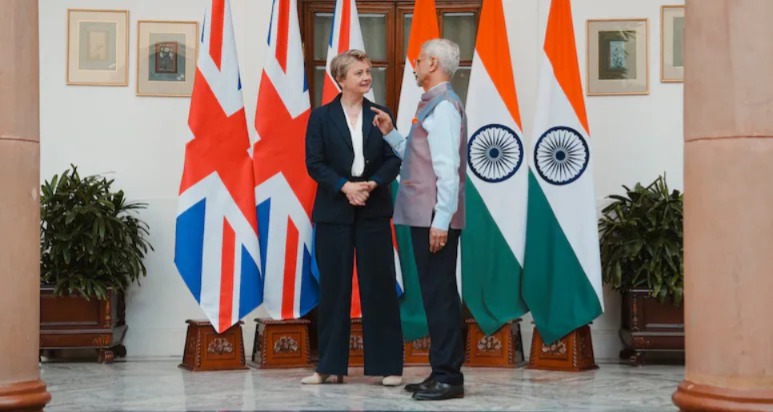
New Delhi: British Foreign Secretary Yvette Cooper concluded her first official visit to India with a series of agreements and initiatives aimed at deepening cooperation across education, trade, technology, defence and maritime security, underscoring the growing importance of the India-UK partnership.
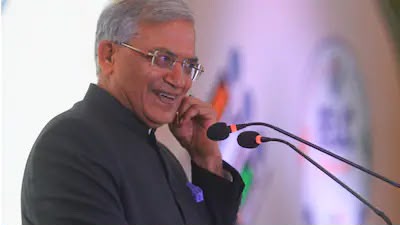
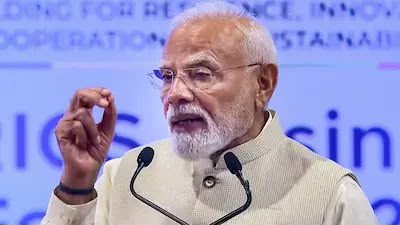
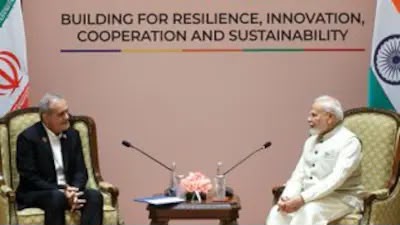
The two day visit to New Delhi marked Cooper’s first trip to India as Britain’s top diplomat and reflected the strategic significance London attaches to its relationship with New Delhi. During the visit, she held discussions with External Affairs Minister S. Jaishankar and also met Prime Minister Narendra Modi to review progress under the India-UK Vision 2035 framework.
The review focused on key areas including economic growth, technology and innovation, defence and security, climate action and education. Both sides expressed confidence in the potential of the Comprehensive Economic and Trade Agreement (CETA), describing it as a major step towards expanding bilateral trade and investment.
Technology cooperation also featured prominently, with both countries highlighting progress under the India-UK Technology Security Initiative. Areas such as artificial intelligence and critical minerals were identified as priorities as the two nations seek to strengthen supply chain resilience and technological collaboration.
In the defence sector, India and the United Kingdom announced an exchange programme for military instructors between training institutions. Though limited in scale, the initiative is viewed as an important step towards strengthening defence engagement and professional cooperation between the armed forces of both countries.
One of the most significant outcomes of the visit came in the education sector. A Letter of Approval was formally handed over to University of Liverpool, enabling it to establish a campus in Bengaluru under India’s National Education Policy. The new campus is expected to begin admitting students from the next academic year, expanding opportunities for international higher education within India.
The visit also saw the launch of a Regional Maritime Security Centre for Excellence through a partnership between King’s College London and the National Maritime Foundation. Additionally, a UK-India Critical Minerals Supply Chain Observatory was unveiled to support cooperation in securing resources essential for clean energy and advanced technologies.
The outcomes of the visit reflect the steady evolution of the India-UK Comprehensive Strategic Partnership, with both nations signalling a strong commitment to expanding collaboration across emerging sectors and shared strategic interests.
Sorry, there was a YouTube error.