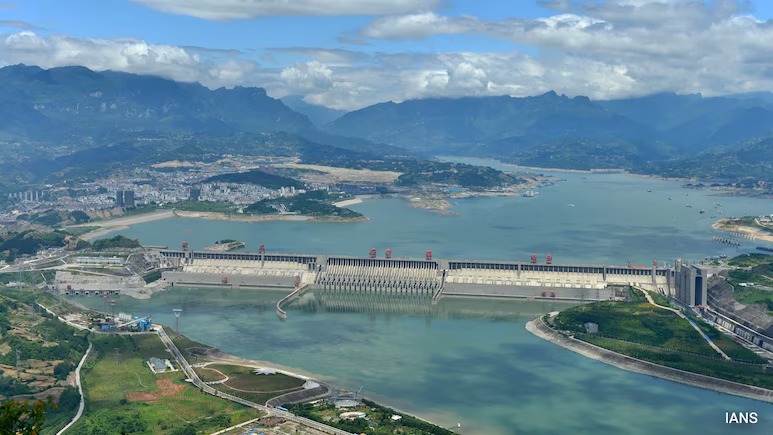
New Delhi: China’s construction of what is set to become the world’s largest hydroelectric dam on the Yarlung Tsangpo River in Tibet is raising fresh concerns in India over its potential impact on water security, ecology and regional geopolitics.
The project is located in the lower reaches of the Yarlung Tsangpo, around 50 kilometres from the Indian border. The river enters India through Arunachal Pradesh as the Siang before flowing into Assam as the Brahmaputra, a lifeline for millions of people in the country’s northeast.
According to intelligence inputs reviewed by Indian agencies and satellite imagery, construction activity at the site has accelerated in recent months. The Indian government is closely monitoring the development, viewing it as a significant component of China’s broader hydropower ambitions in Tibet.
Experts have long warned that large dams on transboundary rivers can alter the natural flow of water, disrupt sediment transport, affect ecosystems and change flood patterns downstream. Such concerns are particularly acute for India, where the Brahmaputra supports agriculture, fisheries and livelihoods across vast areas.
Beyond environmental concerns, the project also carries strategic implications. Analysts say control over water flows in the upper reaches of the river could provide China with additional leverage during periods of diplomatic or military tension, making the issue a matter of national security for India.
China has maintained that the project is aimed solely at generating clean energy and will not adversely affect downstream countries. However, New Delhi has repeatedly conveyed its concerns to Beijing through diplomatic channels and the Expert Level Mechanism on transboundary rivers established in 2006.
The issue has also been raised at the highest political levels, with External Affairs Minister S. Jaishankar discussing it during his visit to China in July 2025. Alongside diplomatic engagement, India is strengthening its monitoring capabilities and preparing measures to safeguard communities living downstream of the Brahmaputra.
Sorry, there was a YouTube error.