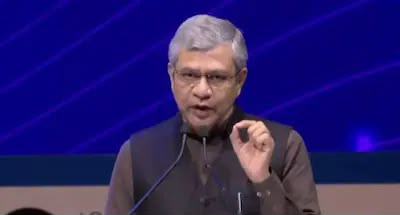
New Delhi: Information Technology Minister Ashwini Vaishnaw has stressed the importance of regulating artificial intelligence (AI), stating that the technology offers significant benefits but also presents complex risks to user safety.
Speaking on the sidelines of SEMICON India 2026 on Thursday, Vaishnaw said every emerging technology brings both opportunities and challenges, making regulation an important part of ensuring public safety.
He explained that AI requires special attention because its risks are more difficult to anticipate than those associated with certain physical technologies. According to the minister, understanding how to ensure safety in AI systems is a particularly complex task because of the technology’s broad and evolving capabilities.
Vaishnaw said the government is working closely with the technology industry to develop an appropriate regulatory framework. The focus, he added, is on identifying effective ways to make AI safer while protecting citizens in the digital environment.
The minister’s remarks come amid growing international discussions about the impact of artificial intelligence on society, business and individual rights. As AI adoption expands, concerns have increased over deepfakes, misinformation, online fraud, privacy violations and potential discrimination caused by automated systems.
The development of increasingly powerful AI models has also prompted safety researchers and technology professionals to raise questions about the possibility of serious long-term consequences. These discussions have placed additional pressure on governments and companies to establish safeguards that address both immediate and future risks.
Countries around the world are exploring different approaches to AI governance, seeking to protect users while allowing technological innovation to continue. Technology companies, researchers and policymakers are examining ways to improve transparency, accountability and security in AI development and deployment.
India’s efforts to work with industry reflect the broader challenge of creating regulations that address emerging risks without unnecessarily restricting the potential economic and social benefits of artificial intelligence.