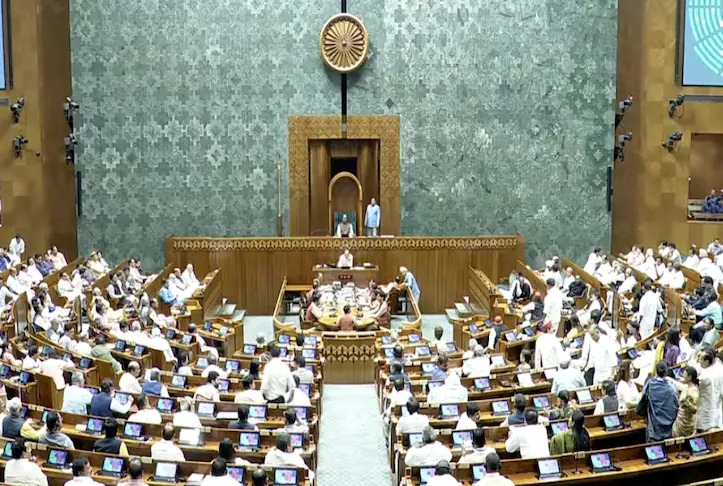
New Delhi: The Centre is set to introduce the Public Examinations (Prevention of Unfair Means) Amendment Bill, 2026, in the Lok Sabha today as part of its efforts to strengthen India’s examination system following widespread concerns over paper leaks and recruitment exam irregularities.
Union Minister of State for Personnel, Public Grievances and Pensions Jitendra Singh is expected to table the Bill, which proposes tougher penalties and faster legal action against those involved in examination fraud. The legislation aims to amend the existing Public Examinations (Prevention of Unfair Means) Act, which came into force in 2024.
Ahead of the debate, Parliamentary Affairs Minister Kiren Rijiju appealed to opposition parties to participate constructively in the discussion, urging them to avoid disruptions and contribute to shaping stronger laws against exam malpractices.
The proposed amendments significantly increase the punishment for offences related to public examinations. Individuals found guilty of leaking question papers or engaging in unfair means could face a minimum prison term of five years, extendable to 10 years, along with fines of up to ₹50 lakh. Organised criminal networks involved in such activities could face at least seven years in prison, with the sentence extending further and fines reaching as high as ₹10 crore.
The Bill also proposes the establishment of fast track courts to ensure speedy trials, with cases expected to be disposed of within two months. It identifies 15 specific offences, including leaking question papers, tampering with OMR sheets, creating fake examination websites, issuing counterfeit admit cards and other forms of organised examination fraud.
The government is also expected to field several young Members of Parliament from the National Democratic Alliance to participate in the debate, highlighting the issue’s importance for students and young job seekers. The discussion on the legislation is likely to continue for eight to ten hours.
Congress MP Karti Chidambaram has questioned the effectiveness of the proposed amendments, arguing that while the Bill increases penalties, it does not adequately address measures to prevent paper leaks from occurring in the first place.
The legislation comes in the wake of nationwide protests over examination irregularities, particularly the NEET paper leak controversy, which prompted a renewed focus on reforming India’s examination system. The government has also announced a high powered task force to recommend long term measures aimed at improving the transparency, security and credibility of competitive examinations across the country.
1
/
12


#JustCasual With Subash Shirodkar: “Won’t Allow Mhadei To Be Diverted”
#JustCasual Damu Naik | “Vijai Sardesai Has Failed as Fatorda MLA”
#JustCasual With Jayesh Salgaocar: “I Have Left BJP With Dignity. No Future Plans Yet”
#JustCasual with Manikrao Thakare | “Congress Open for an Alliance, It’s Up to Other Parties”
Exclusive: RGP MLA Viresh Borkar Breaks Silence on Party Rift
#JustCasual With Joshua de Souza “It’s Election Time so critics will say anything”
1
/
12