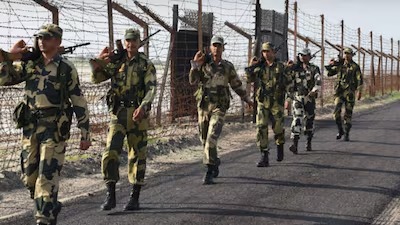
New Delhi: The Siliguri Corridor, long regarded as one of India’s most strategically vulnerable regions, is undergoing a major transformation as extensive military and infrastructure upgrades reshape its role in the country’s eastern defence architecture.
Often referred to as the “Chicken’s Neck,” the narrow land corridor in North Bengal, measuring between 17 and 22 kilometres at its narrowest point, serves as the only land link connecting mainland India with its eight northeastern states. For decades, its geography was viewed as a potential weak point because most road, rail, fuel and military supply routes to the Northeast pass through the corridor.
According to senior military officials, that perception is changing. They now describe the corridor as an “Elephant’s Trunk,” symbolising strength, flexibility and resilience rather than vulnerability. The shift reflects India’s efforts to transform the corridor from a defensive chokepoint into a well protected strategic gateway capable of supporting both defensive and offensive operations.
Since 2014, the Centre has significantly expanded military infrastructure, border connectivity, logistics networks and surveillance capabilities across the region. Permanent military deployments, improved transportation links and enhanced logistical support have strengthened India’s ability to mobilise forces quickly during both peace and conflict.
A key part of this strategy has been the development of three forward military installations. The Lachit Borphukan Military Station at Bamuni in Assam serves as a major logistics hub, while the Kishanganj Forward Base in Bihar secures vital transportation routes leading towards the Northeast. The Chopra Forward Base in West Bengal strengthens surveillance and rapid response capabilities along one of the corridor’s narrowest sections. Together with the Border Security Force, these bases create multiple layers of surveillance, intelligence gathering and troop deployment.
Security planners have also enhanced preparedness along the India-Bangladesh border following changing regional security dynamics, while maintaining a strong focus on China’s military presence in the Chumbi Valley near the Sikkim Bhutan border. The Army’s Trishakti Corps has been reinforced with advanced capabilities, including S-400 air defence systems, BrahMos supersonic cruise missiles and Rafale fighter aircraft operating from Hasimara Air Force Station.
Alongside military deployments, strategic infrastructure projects have become a major focus. These include new highways, railway modernisation, proposed underground rail networks for wartime resilience, expanded border roads and alternative connectivity initiatives such as the Kaladan Multi Modal Transit Transport Project through Myanmar. These measures are designed to ensure uninterrupted connectivity and reduce dependence on a single transport route during emergencies.
Military officials believe these combined efforts have fundamentally changed the strategic significance of the Siliguri Corridor, turning what was once considered India’s greatest geographical vulnerability into one of its most fortified and strategically important gateways to the Northeast.