Team Goemkarponn
PANAJI: Chief Minister Pramod Sawant on Monday said temples were historically targeted not only as religious structures but also as centres of social and cultural unity, where communities gathered for prayers, bhajans and kirtans.
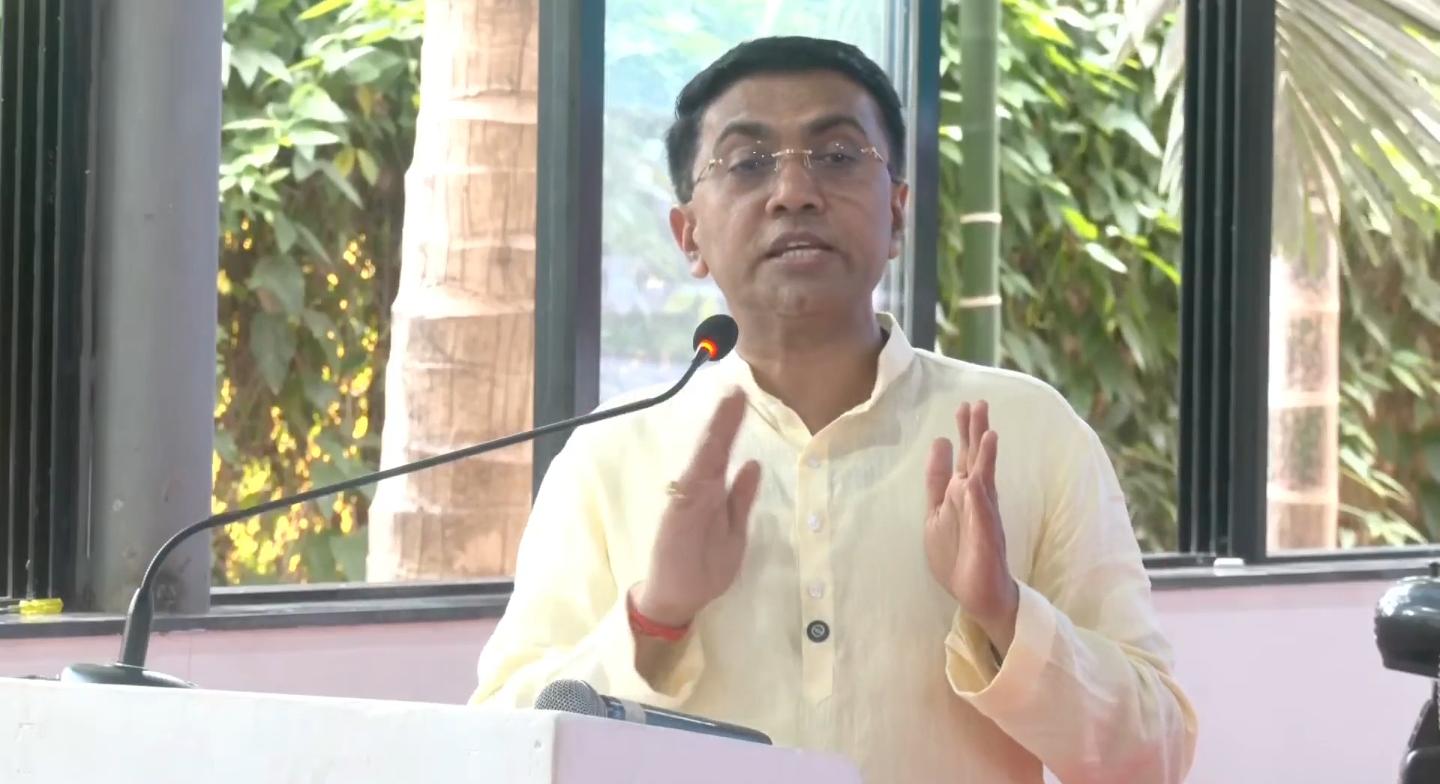
Speaking at the inauguration of Somnath Swabhiman Parv 2026, Sawant referred to historical accounts of the destruction of the Somnath Temple in Gujarat nearly 1,000 years ago by Ghazni. He said repeated attacks on temples were attempts to weaken the faith and cultural identity of people, but added that the Somnath Temple continued to rise again after every destruction, becoming a symbol of resilience and devotion.
The Chief Minister also drew parallels with Goa’s history during Portuguese rule, stating that temples in several villages were demolished as an initial step to prevent people from assembling for religious and cultural activities. According to him, such actions were aimed at disrupting traditional practices and weakening community ties rooted in faith and spirituality.
Sawant said the reconstruction of the Somnath Temple under the leadership of former Home Minister Sardar Vallabhbhai Patel marked a significant moment in independent India’s cultural revival. He added that the temple was later inaugurated by India’s first President Rajendra Prasad and that the completion of 75 years of its reconstruction is being celebrated across the country.
He further said Prime Minister Narendra Modi has declared the current year as “Somnath Parv Year,” under which several events are planned nationwide. In Goa, related programmes will be organised at Tapobhoomi, he added.
Highlighting Goa’s spiritual importance, Sawant described the state as a “Dev Bhumi” that attracts tourists seeking spiritual experiences and temple tourism. He noted that devotees visiting the Goveshwar Temple are able to have darshan of all 12 Jyotirlingas at one place, making it a unique centre of attraction for pilgrims.