Team Goemkarponn
PANAJI: The Government of Goa has taken a significant step towards strengthening cancer control in the state by declaring cancer a notifiable disease, paving the way for systematic reporting and surveillance of cancer cases.
The move has been welcomed by Dr Shekhar Salkar, President of the National Organisation for Tobacco Eradication (India), who described the decision as a landmark public health initiative with the potential to strengthen Goa’s long-term cancer-control strategy.
Through a notification issued by the Public Health Department on August 20, the state has introduced a formal mechanism to monitor cancer incidence, mortality, patterns and trends. The system is intended to provide reliable data for planning and evaluating prevention, screening, early detection, treatment and palliative-care programmes.
Under the notification, newly diagnosed cancer cases, including in-situ and invasive malignancies, will have to be reported. The reporting requirement covers a wide range of healthcare establishments, including government and private hospitals, medical colleges, nursing homes, clinics, oncology and day-care centres, diagnostic laboratories, hospices, palliative-care institutions and cancer screening programmes.
Healthcare establishments have been asked to report cancer cases preferably within seven days of diagnosis and, in any case, within one month. Reporting will be carried out through the cancer surveillance or cancer registry system specified by the Directorate of Health Services.
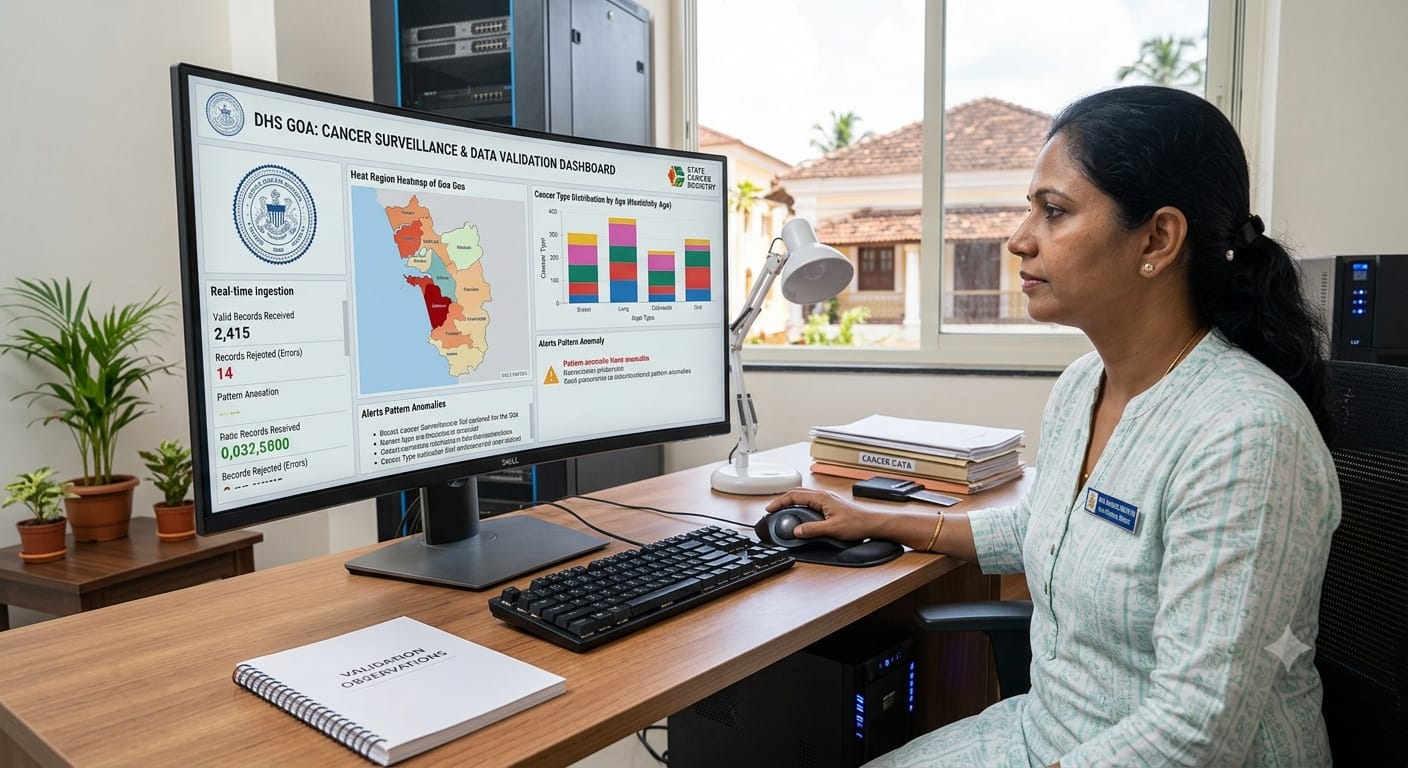
The Non-Communicable Disease Cell of the Directorate of Health Services has been designated as the nodal authority. The DHS will also establish or designate a State Cancer Registry or State Cancer Surveillance System to compile, validate, analyse and monitor the reported data.
The new system is expected to provide the state with a clearer picture of the cancer burden in Goa, including the types of cancer being detected, geographical trends and the populations most affected.
According to Salkar, reliable cancer data can help the government identify gaps in screening and diagnosis, strengthen referral mechanisms, plan healthcare resources and assess the effectiveness of cancer-prevention initiatives.
The notification also includes provisions for maintaining confidentiality of individual patient information. Data collected through the reporting mechanism is intended primarily for public-health surveillance, programme planning, research and monitoring.
Salkar appreciated Chief Minister Pramod Sawant, the Health Minister, the Public Health Department and the Directorate of Health Services for the initiative.
He said the notification should now be backed by further strengthening of the State Cancer Registry, seamless digital reporting from healthcare establishments and regular capacity-building of healthcare professionals.
He also stressed the importance of using the data generated through the system to improve cancer prevention, screening, early diagnosis, treatment and survivorship programmes.
The initiative, he said, could become an important foundation for a comprehensive cancer-control strategy in Goa and potentially serve as an example for other states.