Team Goemkarponn
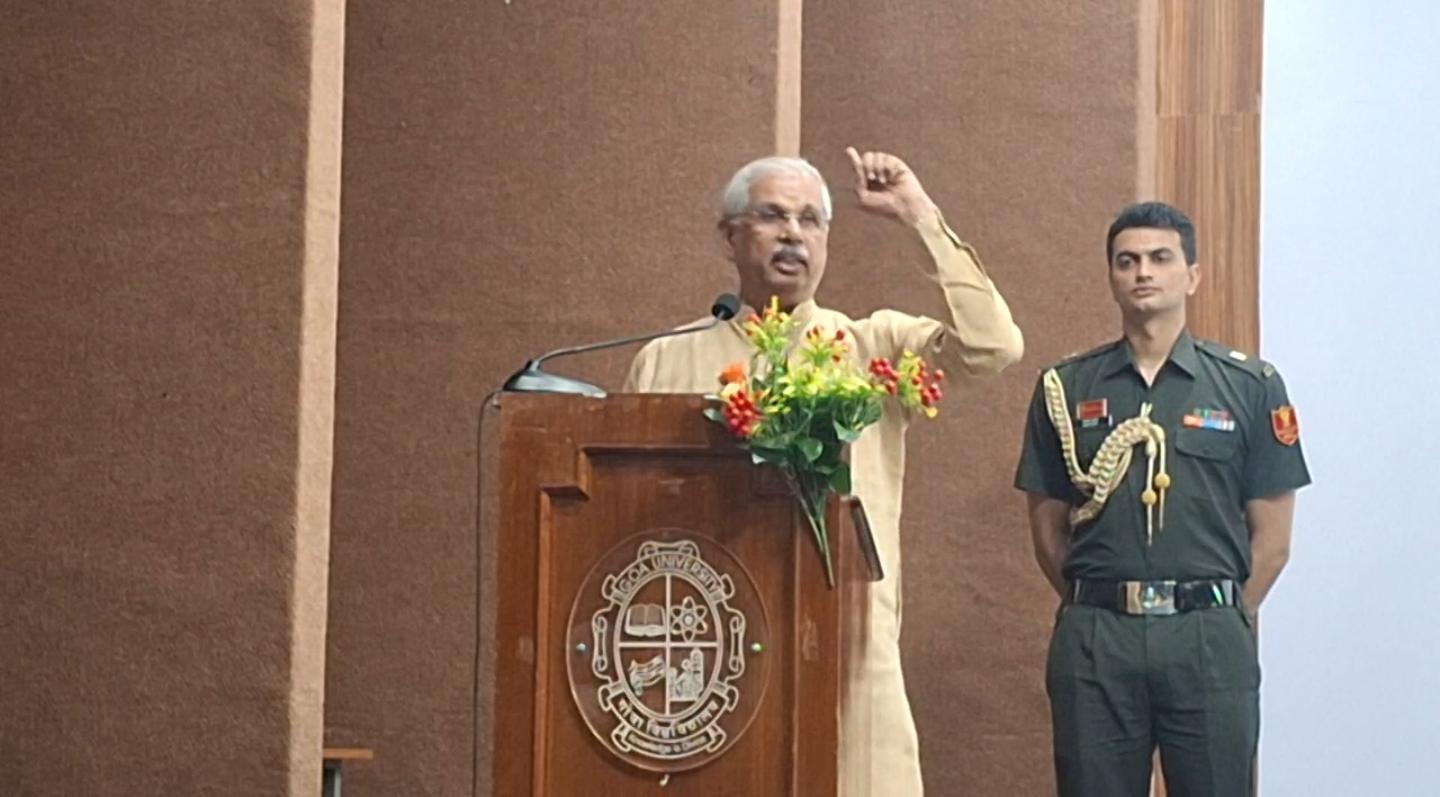
PANAJI: Tamil Nadu and Kerala Governor Rajendra Arlekar on Saturday expressed concern over the absence of any minimum educational qualification for entering politics, saying the issue deserves serious national debate at a time when governance requires informed decision-making and accountability.
Speaking at the National Youth Parliament programme in Panaji, Arlekar said almost every profession in the country mandates some form of education, skill training or certification, whereas politics — despite its critical role in shaping public policy — has no such benchmark.
The event was inaugurated by Arlekar in the presence of Goa Governor P. Ashok Gajapathi Raju.
Using examples from everyday life, the Governor remarked that even driving a vehicle legally requires training and licensing, while professions such as law, medicine, teaching and government service prescribe educational standards.
He noted that even entry-level employees in offices are expected to meet academic requirements, yet individuals can occupy high political office, including ministerial positions, without formal educational qualifications.
Arlekar also raised questions over the absence of any structured system to groom political leadership in the country. While civil servants such as IAS and IPS officers undergo specialised training before taking charge of administration, there is no institutional mechanism to prepare political leaders for governance, he said.
Recalling observations often shared by veteran BJP leader Lal Krishna Advani and references made in satirical works by Hindi poet Kaka Hathrasi, Arlekar said the contrast between politics and other professions reflects a larger systemic gap.
The Governor urged young people to take a greater interest in public affairs and equip themselves with knowledge of India’s Constitution, history and geography before entering politics.
Referring to Prime Minister Narendra Modi’s call for greater youth participation in politics, Arlekar said the country needs committed and informed young leaders capable of guiding India through future challenges.
Speaking on the vision of “Viksit Bharat 2047”, he said the idea of a developed India should not be confined to economic indicators alone.
According to Arlekar, true development must extend to social progress, cultural preservation, educational advancement and effective governance alongside economic growth.
He said India’s cultural identity and civilisational heritage must remain central to the nation’s growth story and urged the youth to reflect on their individual contribution towards achieving the goal of a developed and inclusive India by 2047.
Arlekar said the younger generation would play a defining role in shaping the country’s future and must prepare itself to provide responsible and informed leadership in the years ahead.