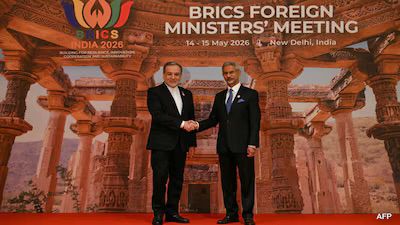
New Delhi: India has raised strong concerns over the escalating tensions in the Middle East and their impact on global energy routes, calling on BRICS nations to work together in addressing growing geopolitical and economic uncertainty. Speaking at the BRICS foreign ministers’ meeting, External Affairs Minister S. Jaishankar stressed the importance of protecting maritime stability in key international waterways, particularly the Strait of Hormuz and the Red Sea.
Addressing representatives including Iranian Foreign Minister Seyed Abbas Araghchi and UAE Minister of State for Foreign Affairs Khalifa Shaheen Al Marar, Jaishankar said peace and stability must be pursued collectively and consistently. He highlighted that uninterrupted maritime movement through strategic waterways remains essential for the global economy and warned against disruptions that could impact international trade and energy supplies.
Without directly naming any country, Jaishankar underlined the importance of respecting sovereignty and territorial integrity, while emphasising that dialogue and diplomacy remain the only sustainable solutions to conflict. He also reiterated India’s willingness to contribute to de escalation efforts and support initiatives aimed at restoring regional stability.
The discussions took place amid rising tensions between Iran and the United Arab Emirates over allegations related to attacks on energy infrastructure in the Gulf region. Differences between the two countries reportedly prevented BRICS from issuing a joint consensus statement on the West Asia crisis.
Jaishankar also highlighted the need for all BRICS members, including newer entrants, to fully respect the grouping’s consensus based approach on major international issues. The expanded BRICS bloc now includes Brazil, Russia, India, China, South Africa, Egypt, Ethiopia, Iran, the UAE, and Indonesia.
During the meeting, Araghchi urged BRICS nations to condemn what he described as violations of international law by the United States and Israel, while calling on member countries to resist Western dominance in global affairs.
The meeting comes ahead of Prime Minister Narendra Modi’s upcoming visit to the UAE, where strengthening energy cooperation is expected to remain a key focus of discussions with UAE President Mohamed bin Zayed Al Nahyan.