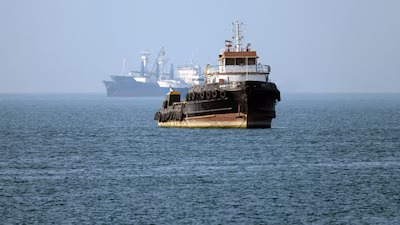
New Delhi: India has emerged as one of the largest users of the Strait of Hormuz shipping corridor in the weeks following the June 17 peace memorandum of understanding between the United States and Iran. Newly released figures show that merchant vessels travelling to and from India accounted for a significant share of transit requests submitted to Iranian authorities overseeing maritime movement through the strategic waterway.
More than 200 non Iranian cargo vessels applied for passage permits and insurance coverage during the three week period after the agreement. Among ships leaving the Persian Gulf, India accounted for 20 percent of all transit requests, placing it just behind China at 21 percent. Other Asian destinations represented 29 percent of the requests, while movements within the Gulf region made up 22 percent.
India ranked first among countries of origin for vessels entering the Persian Gulf, accounting for 21 percent of all applications. China followed with 19 percent, while other Asian nations contributed 20 percent. Regional traffic within the Gulf accounted for 24 percent, with the remaining 16 percent linked to destinations outside the region.
The figures reflect India’s growing dependence on the Strait of Hormuz, which remains one of the world’s most critical energy corridors. Around 40 percent of India’s crude oil imports, 60 percent of its liquefied natural gas imports and 90 percent of its liquefied petroleum gas imports originate in West Asia and pass through the strait. Overall, India imports more than 88 percent of its crude oil requirements, around 60 percent of LPG and nearly half of its natural gas demand.
According to the latest data, 53 percent of all applications were submitted by vessels leaving the Persian Gulf, while 47 percent sought entry. Iranian authorities approved 79 percent of the requests, with another 14 percent still under review as of July 14. The average processing time was around 50 hours.
Although a temporary understanding between Washington and Tehran reduced tensions, the Strait of Hormuz remains at the centre of strategic competition. Iran continues to require commercial vessels to obtain transit permission and follow designated shipping corridors, while discussions over future transit fees and maritime security continue to shape navigation through one of the world’s busiest energy routes.
Sorry, there was a YouTube error.