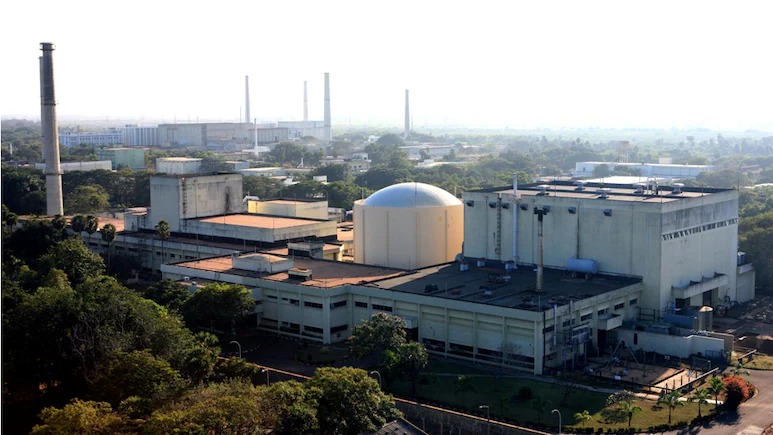
New Delhi: Kalpakkam (Tamil Nadu): In a significant step towards clean energy innovation, India has demonstrated a new method of producing green hydrogen using heat from a nuclear reactor, marking a major advancement in the country’s fast breeder reactor programme.
Scientists at the Indira Gandhi Centre for Atomic Research (IGCAR) in Kalpakkam have successfully shown that advanced nuclear reactors can generate not only electricity but also hydrogen, offering a dual-output clean energy system. The development is being viewed as a breakthrough in sustainable fuel technology.
At the centre of this achievement is the Fast Breeder Test Reactor (FBTR), operational since 1985, which has long supported India’s second-stage nuclear programme. The reactor is now being used to supply process heat for hydrogen production through a thermochemical method known as the Copper Chlorine process, developed by the Bhabha Atomic Research Centre (BARC).
Unlike conventional hydrogen production methods that rely on fossil fuels, this system uses nuclear heat directly, making the output completely carbon-free. Officials say this marks a shift in how nuclear energy can be utilised beyond electricity generation.
According to the Department of Atomic Energy (DAE), the integration of nuclear power with hydrogen production could play a key role in building a sustainable energy ecosystem. Hydrogen is considered a critical fuel for industries that are difficult to decarbonise and for future fuel-cell technologies.
Experts at IGCAR highlighted that the FBTR’s ability to operate at high temperatures makes it suitable for such advanced applications. The reactor also serves as a testbed for India’s long-term fast breeder programme, which aims to improve fuel efficiency and energy security.
The Prototype Fast Breeder Reactor (PFBR), currently under development at Kalpakkam, has recently achieved criticality, further strengthening India’s nuclear roadmap.
Officials said the hydrogen facility is currently at the demonstration stage but could pave the way for large-scale commercial plants in the future. The development aligns with India’s broader goal of achieving net-zero emissions by 2070, positioning nuclear energy as a key pillar of the clean energy transition.
Sorry, there was a YouTube error.