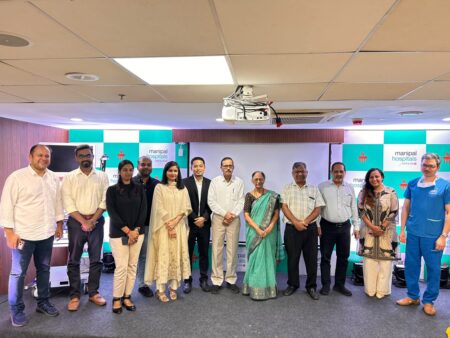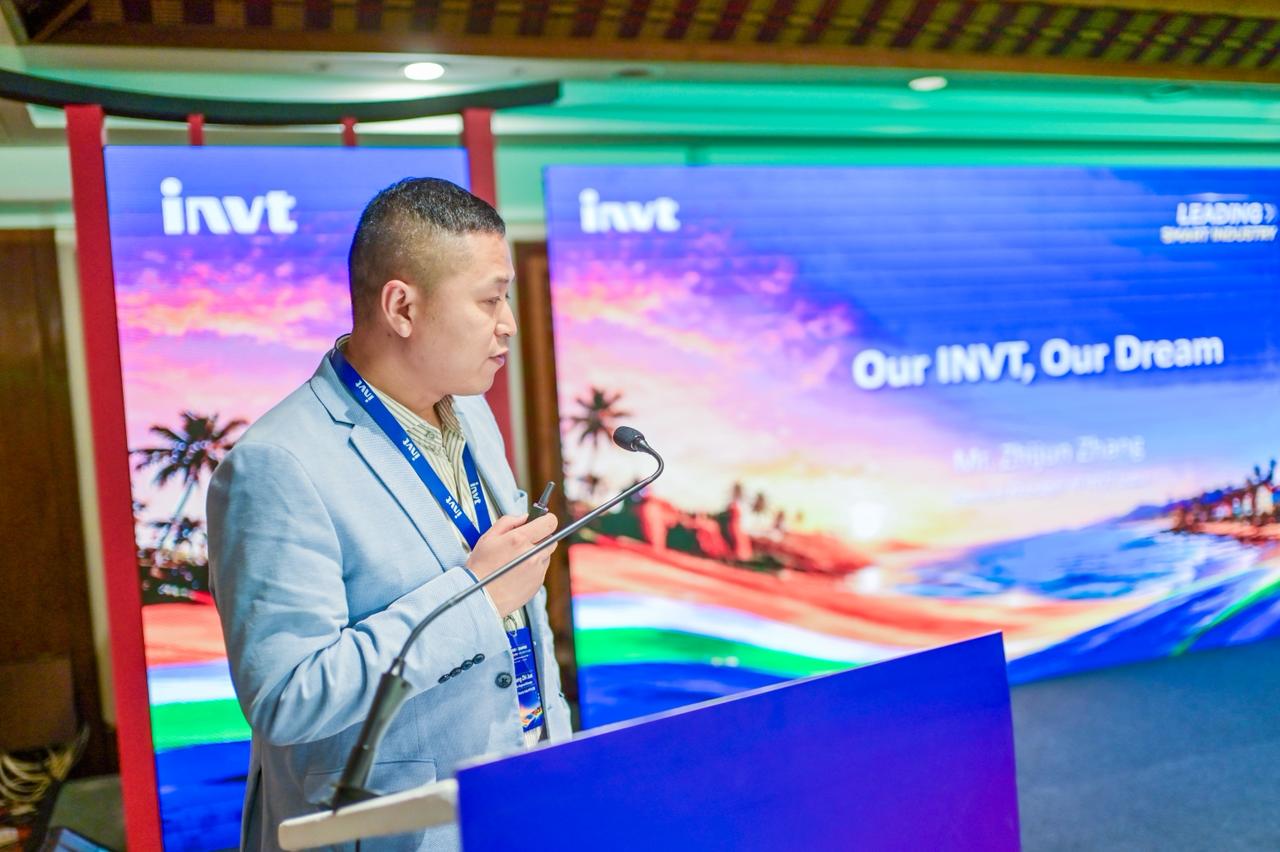
Goa: Global industrial automation and energy solutions major INVT reaffirmed its India commitment at the “INVT Strategy and New Product Launch 2026” held in Goa on May 16-17. The two-day summit drew over 125 distributors, strategic partners, and industry leaders under the theme “Leading Smart Industry, Shaping Net-Zero Future.”
Speaking exclusively on the sidelines of the event, *Mr. Wang Jian, General Manager of Global Sales and Marketing at INVT*, underlined India’s strategic role. “India is not a market we discovered recently. It’s already our number-one international market. Manufacturing growth, renewable energy expansion, and digital infrastructure are accelerating together here. That convergence is rare globally,” he said.
Wang added that INVT’s India roadmap aligns closely with “Make in India” through local SKD assembly, 11 service centres nationwide, and growing engineering capability. “Sustainable market presence is built through local ecosystems, not export relationships,” he noted.
*Mr. Zhang Zhi Jun, India Regional Director*, shared ground-level insights on customer needs and product strategy. “Indian factories run above 45°C, face dust, voltage swings. Our new GD28 IP66 drive was built for that reality,” Zhang said. “Customers here don’t just ask price. They want energy savings in rupees per year, maintenance costs documented, service response committed.”
The summit’s highlight was the launch of the GD290 Series High Performance VFD, spanning 0.75kW to 1200kW. Zhang explained the India-specific advantages: “The Dynamic Load ECO algorithm cuts 5-10% energy use in real conditions. For textiles, HVAC, or municipal plants, that’s direct savings every month. The book-shaped design saves 30% panel space, and enhanced coating extends life by 30% in humid, dusty sites.”
On growth sectors, Zhang was specific: “Automation demand is strong in cement, water treatment, textiles, packaging, and machine tools. Cement is critical — India is the world’s second-largest producer and drive-based optimization of kilns and fans is proven.” For energy, he pointed to solar, C&I storage, and data centers. “India can add renewable capacity at scale. The next step is grid stability, and that’s where storage and intelligent power systems come in.” Addressing channel strategy, Zhang said INVT is moving “from transactional distribution to capability-based collaboration.” The focus: strengthen large distributors, build vertical specialists in air compressors and cranes, and partner with system integrators who deliver complete solutions, not just components.
On PM Narendra Modi’s energy conservation push, Wang called it “political voice to an economic reality our customers live with daily.” He admitted three challenges: proving savings with auditable data, reaching MSMEs with limited capital, and competing against low-quality suppliers. “Holding the line on quality is what our SAFE values stand for,” Wang said.
Looking ahead, both leaders stressed two shifts: from products to integrated solutions, and from grid-dependent to energy-resilient operations. “The Indian factory of 2028 will demand precision, connectivity, and safety that today’s installed base can’t meet. We’re developing for that factory today,” Wang concluded.
On Goa, Zhang noted the state’s pharma and food processing strengths but said automation adoption and the local SI ecosystem remain nascent. “Goa has the foundation to move faster than most. Our role is to bring local technical support and grow with the market.”
The event concluded with a partner awards gala, signaling INVT’s intent to deepen its role in India’s smart industry and clean energy transition over the next five years.