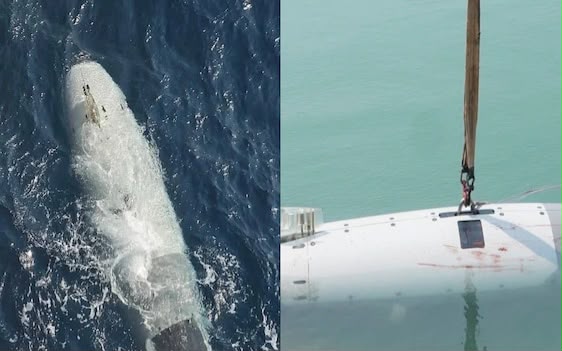
Tehran: Iran has claimed that its navy captured a US unmanned underwater vehicle near the entrance to the Strait of Hormuz during an intelligence operation, adding another flashpoint to the escalating confrontation between Tehran and Washington.
The vehicle was identified as a Dive LD, an autonomous underwater system developed for surveillance and other maritime missions. Iranian authorities described it as a highly advanced submersible and released footage purportedly showing the captured vehicle.
The US military acknowledged that one of its underwater drones had malfunctioned while conducting a survey of regional waters more than a day earlier. However, it did not confirm whether the malfunctioning vehicle was the same system Iran claimed to have seized. The US described the drone as an older model that did not carry classified sonar or radar equipment or collect sensitive information.
The incident highlights Washington’s growing reliance on unmanned naval technology to monitor large stretches of ocean, conduct intelligence operations and track military activity without exposing personnel to direct danger. Dive LD systems can reportedly remain underwater for extended periods and operate at significant depths.
The confrontation has also widened beyond the underwater incident. Iran’s Revolutionary Guard claimed that its air defence systems shot down an MQ 9 Reaper drone over the Strait of Hormuz.
Meanwhile, US Central Command said American forces had destroyed five Iranian crude oil tankers following attacks by Iran’s Revolutionary Guard against a US warship. The US military said the strikes followed two attempted ballistic missile attacks on the vessel.
Washington has also expanded economic pressure on Tehran, with the US Treasury targeting 27 Iranian airlines through sanctions. The measures accuse Iranian aviation networks of supporting military procurement and transporting personnel and equipment.
Iranian President Masoud Pezeshkian maintained that Tehran opposes war but would continue resisting what it considers aggression.
The latest developments come amid a broader US Iran conflict that began with joint US and Israeli attacks on Iran on February 28, followed by Iranian missile and drone strikes against Israel and US positions. A June memorandum had outlined negotiations aimed at ending the conflict, but those efforts remain uncertain amid the latest escalation.