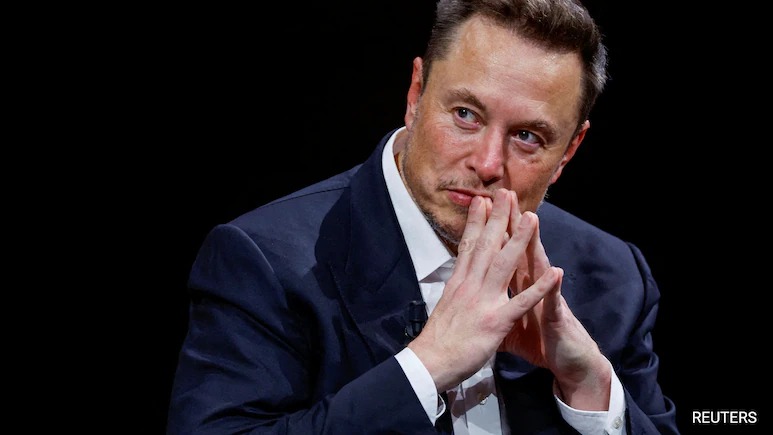
New Delhi: Elon Musk has questioned why Starlink has not yet received final approval to launch its satellite internet services in India, despite what he describes as five years of compliance with Indian laws and regulatory requirements. The SpaceX chief also raised questions about the influence of billionaire Mukesh Ambani amid an ongoing dispute over the company’s entry into the Indian market.
In a post on X, Musk claimed that Starlink had complied with every government requirement and questioned the continued delay in obtaining a licence. He also asked whether Ambani was the “real boss” of India, intensifying the public debate over competition in the country’s telecommunications sector.
The controversy began after Musk alleged that certain powerful business interests were obstructing Starlink’s entry into India to protect their market positions. He described the alleged obstruction as harmful to Indian consumers, although the claims have not been independently established.
The Ministry of Communications rejected allegations that India’s regulatory framework discriminates against satellite internet providers. The government maintained that it follows a fair and non discriminatory authorisation process for telecommunications services, including satellite communications.
According to the ministry, licences have been granted to three companies operating in the global mobile personal communications by satellite category: Starlink, Bharti backed Eutelsat OneWeb and Jio Satellite Communications, a subsidiary of Jio Platforms.
However, obtaining a licence does not automatically permit companies to begin commercial operations. The ministry said all three providers must demonstrate compliance with applicable security conditions designed to protect users and their data. Security assessments for all three companies are currently underway.
Once the required assessments are completed, the companies can seek spectrum allocation, which is necessary to provide their services.
The government argued that all three operators are at broadly the same stage of the regulatory process, rejecting suggestions that Starlink is being singled out.
Lauren Dreyer, SpaceX’s vice president for Starlink business operations, also defended the company’s position, stating that Starlink had invested in infrastructure designed to meet Indian regulatory and security requirements, including provisions for keeping user data within the country.
The dispute highlights the growing competition surrounding satellite internet services in India, where Starlink’s proposed entry could expand connectivity options, particularly in remote and underserved areas. The timing of its commercial launch will depend on the completion of the required regulatory and security procedures.
Sorry, there was a YouTube error.