Team Goemkarponn
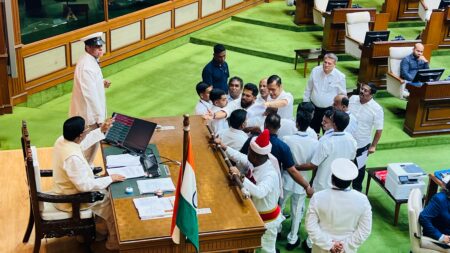
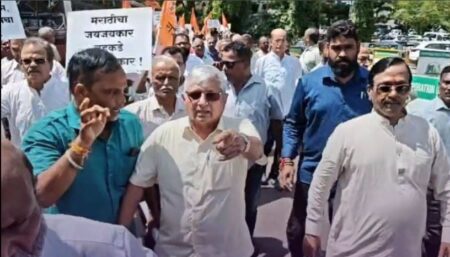
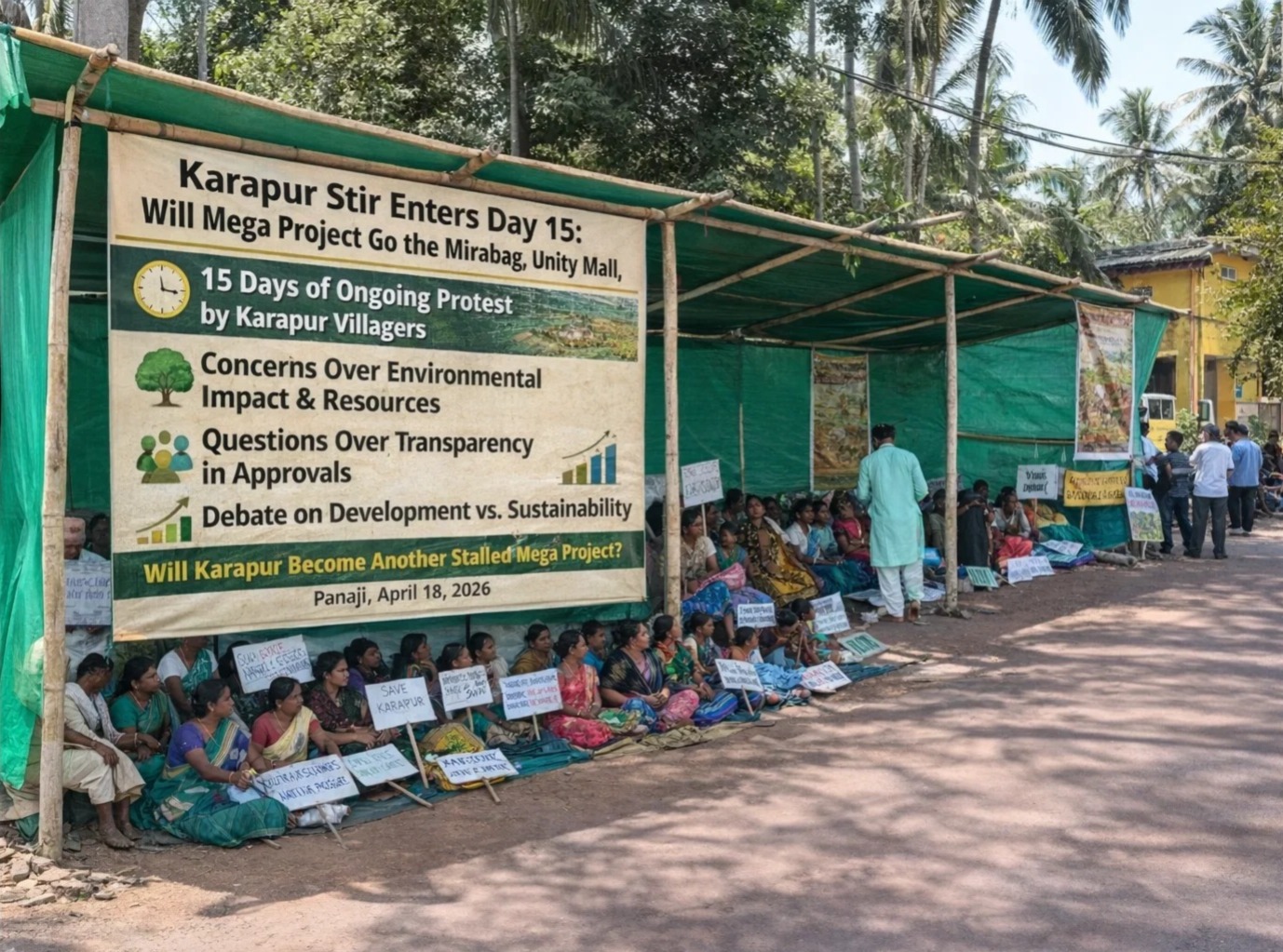
Panaji: The agitation against the proposed mega project at Karapur has entered its 15th day, with villagers continuing their protest with renewed intensity, raising questions over whether the project could meet the same fate as stalled developments like Mirabag, Unity Mall and the contentious 39-A proposals.
What began as a localised protest has now evolved into a sustained movement, with residents from Karapur-Sarvan and adjoining areas participating in large numbers. Women, youth and elderly villagers have been actively involved, underlining the depth of opposition and the growing unity within the community against the project.
At the core of the protest are concerns over environmental degradation, pressure on natural resources, and the long-term impact on livelihoods. Villagers fear that the large-scale development could strain water sources, increase infrastructure burden, and disturb the ecological balance of the area. Many have also questioned the level of transparency in the approval process, alleging inadequate public consultation before the project was pushed forward.
The protest has also reignited a familiar debate in Goa—development versus sustainability. In recent years, several major projects have faced stiff resistance from local communities, leading to delays, revisions, or in some cases, complete halts. The mention of Mirabag, Unity Mall and 39-A has become symbolic of how sustained public opposition can significantly alter the course of large-scale projects in the state.
Political observers believe the Karapur agitation could follow a similar trajectory if authorities fail to engage with stakeholders and address concerns in a credible manner. The longer the protest continues, the greater the pressure on the government to respond, either through dialogue, policy adjustments, or a rethink of the project itself.
For now, there has been no definitive response indicating any rollback or modification. However, the persistence of the agitation suggests that villagers are unlikely to relent without concrete assurances. Protesters have maintained that their movement will continue until their demands are met and the project is reconsidered.
The unfolding situation places the spotlight once again on governance and planning in Goa, particularly the need for inclusive decision-making in projects that directly impact local communities. As the protest crosses the two-week mark, all eyes are on whether Karapur will emerge as yet another case where public resistance reshapes the state’s development agenda.