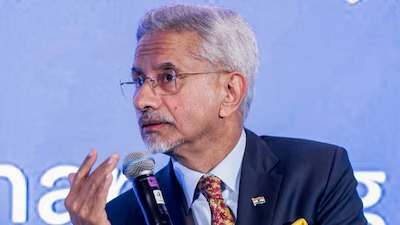
New Delhi: External Affairs Minister S. Jaishankar on Monday called for stronger efforts to preserve India’s ancient manuscripts, describing them as vital records of the country’s cultural memory, intellectual traditions and civilisational history.
Speaking at an event on Asian texts and practices at the India International Centre in New Delhi, Jaishankar highlighted the importance of protecting traditional knowledge and ensuring that it remains accessible to future generations.
He explained that manuscripts serve a purpose beyond storing information. They document how societies developed ideas, conducted experiments, organised institutions and passed knowledge from one generation to another. Preserving these records, he stressed, is essential to understanding how human civilisation has evolved.
Jaishankar also cautioned that historical disruptions can place traditional knowledge at risk. The gradual disappearance of languages and scripts, along with the decline of interpretative traditions, can lead to the loss of entire bodies of knowledge.
The External Affairs Minister emphasised that preserving cultural identity does not require societies to isolate themselves from the rest of the world. Instead, civilisations can maintain their distinctiveness by engaging with other cultures from a position of confidence.
Highlighting India’s rich heritage in healing and wellness, Jaishankar referred to the development of traditional knowledge through observation, reflection and practical experience. This heritage includes Vedic hymns, Buddhist monastic traditions and specialised writings on surgery, pharmacology and therapeutic practices.
He also underlined the importance of cultural exchanges in spreading medical knowledge across regions. Pilgrimage routes and trade networks helped ideas travel between communities, while Sanskrit texts were translated into different languages. These exchanges encouraged practitioners to develop new techniques, explore medicinal substances and expand pharmaceutical practices.
Jaishankar stressed that preservation must go hand in hand with efforts to make manuscripts meaningful to contemporary audiences. Improving access, raising awareness and displaying these materials effectively are important steps towards ensuring their continued relevance.
He also highlighted the potential of artificial intelligence to support manuscript preservation, documentation and accessibility. Emerging technologies could help researchers study historical texts, overcome language barriers and bring traditional knowledge to wider audiences.
The minister commended the Samhita Initiative for its work in preserving, documenting and making the manuscript traditions of the Indian subcontinent more accessible.
His remarks underscored the importance of combining cultural preservation with modern technology to safeguard India’s intellectual heritage and strengthen its transmission to future generations.
Sorry, there was a YouTube error.