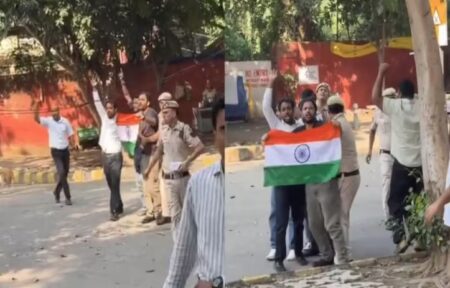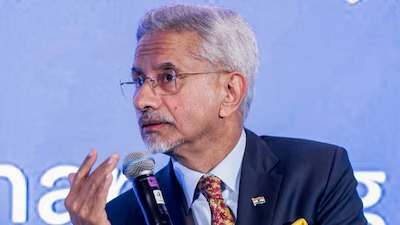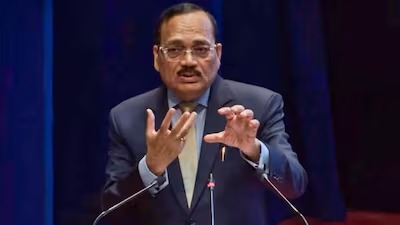
New Delhi: Chief Justice of India Surya Kant on Monday said the protests in Delhi were a law and order issue handled by the concerned authorities, clarifying that managing demonstrations on the streets did not fall within his domain.
Responding to questions from journalists on the recent protests and security restrictions in the national capital, the Chief Justice said, “Ye law and order ka mudda hai. Ye mera vishay nahin hai,” meaning that the matter concerned law and order and was not his subject.
He made the remarks on the sidelines of an event in Delhi marking the 33rd anniversary of the National Human Rights Commission.
The comments came amid several days of demonstrations demanding the removal of Chief Election Commissioner Gyanesh Kumar. The protests were linked to allegations of irregularities in the Special Intensive Revision of electoral rolls.
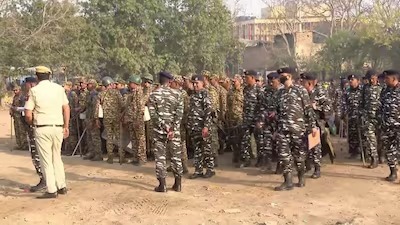
Security arrangements were significantly strengthened in Delhi over the weekend ahead of a demonstration organised by CJP leaders. More than 20,000 security personnel were deployed, 45 Metro stations were closed on Saturday, and checks were intensified at the city’s border entry points. Thousands of demonstrators were detained, including senior CJP leaders and four former chief ministers.
CJI Responds to INDIA Bloc’s Meeting Request
Surya Kant also addressed the INDIA bloc’s request for a meeting over concerns surrounding the electoral roll revision process. He emphasised that the Supreme Court remained accessible to everyone, including ordinary citizens and elected representatives seeking legal remedies.
However, he explained that he could not hold a separate meeting with Opposition leaders to discuss issues already pending before the court.
The Chief Justice received the meeting request on Sunday and responded the same night. The Congress later made his letter public through its official social media account.
In the communication, Kant explained that discussing pending judicial matters through a separate meeting would be inconsistent with the principle of separation of powers and established judicial propriety. He also clarified that the Supreme Court did not exercise administrative authority over the matters raised in the request.
Supreme Court Hearing Scheduled for October 13
The Chief Justice advised the Opposition to seek judicial intervention through a formal petition rather than an administrative memorandum. He referred to Article 32 of the Constitution and the Supreme Court’s power of judicial review as avenues for addressing grievances within its jurisdiction.
He also noted that cases involving similar concerns were scheduled for hearing on October 13. Petitions could be submitted physically at the Supreme Court between 10.30 am and 4.30 pm or through its round the clock electronic filing facility.
Kant assured that petitions filed in accordance with the law would be considered at the earliest possible opportunity.
Sorry, there was a YouTube error.