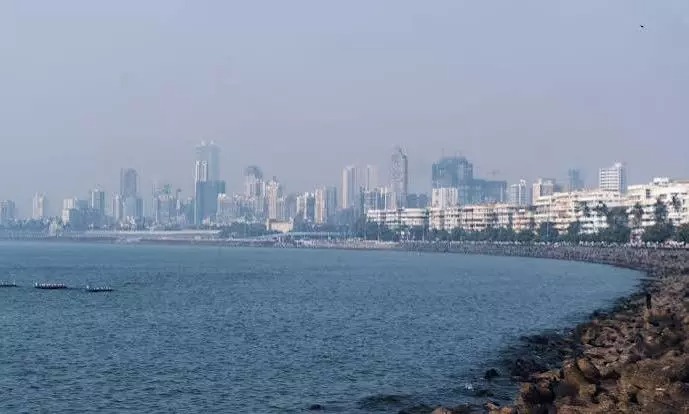
New Delhi: Mumbai is facing a growing threat from rising sea levels, with a new United Nations report warning that millions of people living across vulnerable South Asian cities could eventually be forced from their homes by permanent coastal inundation.
The report, titled Challenges Related to Sea Level Rise and Ways and Approaches to Address, was presented to the UN General Assembly on August 31. It identified Mumbai and Kolkata in India, along with Dhaka in Bangladesh, among the region’s major cities where rising seas could trigger extensive displacement and cause serious economic disruption.
The report estimates that more than 14 million people in low lying areas of South Asia are at immediate risk of losing their homes to permanent inundation. It also stressed that assessments of coastal vulnerability must give greater importance to human displacement and social consequences, rather than focusing primarily on financial losses.
Global sea levels increased by a record 5.9 mm in 2024, significantly above the average annual rise of 4.7 mm recorded between 2014 and 2023.
The UN report projects that global sea levels could rise by at least 0.5 metres by 2100 even if countries pursue ambitious emissions reductions. Under a worst case scenario involving instability of the West Antarctic ice sheet, the rise could reach as much as two metres, putting large coastal populations at serious risk.
Mumbai faces additional challenges because of land subsidence and saltwater intrusion. Rising seawater could contaminate freshwater aquifers and coastal wells, while storm surges could damage housing, sanitation systems and transport infrastructure.
Mumbai’s Climate Action Plan, released by the Brihanmumbai Municipal Corporation in 2021, had also highlighted the city’s vulnerability to sea level rise. The plan warned that large parts of the island city could face inundation risks by 2050.
The city is also witnessing changes in rainfall patterns. BMC data shows that average rainfall during very heavy rainfall events increased from 132 mm to 182 mm over a six year period, adding another layer of risk for Mumbai’s densely populated coastal areas.
Sorry, there was a YouTube error.