Team Goemkarponn
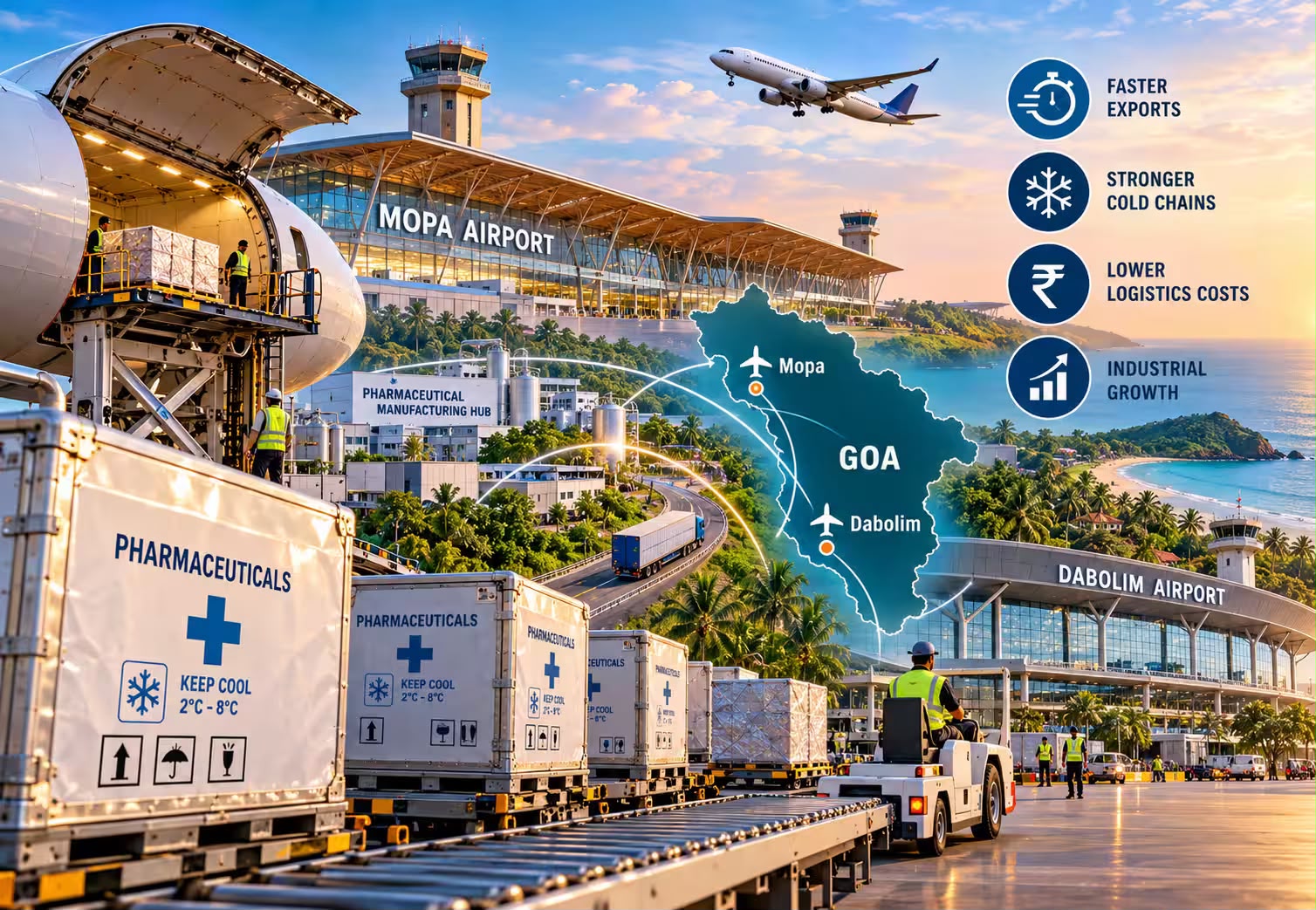
Panaji: Goa’s twin airports, Manohar International Airport at Mopa and Dabolim Airport, could play a growing role in India’s pharmaceutical export network by providing faster cargo movement, specialised cold-chain facilities and improved access to international markets.
The Covid-19 pandemic exposed vulnerabilities in global supply chains and highlighted the importance of reliable transportation for temperature-sensitive products such as vaccines and essential medicines. For pharmaceutical manufacturers across western India, dependence on major metropolitan airports has often meant long road journeys, higher handling costs and delays before shipments can begin their international journey.
India’s growing pharmaceutical industry has increased the need for a more decentralised air cargo network. Regional airports could help manufacturers move products closer to international freight connections while reducing pressure on established gateways such as Mumbai.
Goa has the potential to benefit significantly from this shift. The state has an established pharmaceutical manufacturing base, with industrial areas such as Verna and Tuem supporting production and related activities. Better integration between these industrial centres and the state’s airports could strengthen Goa’s position in the pharmaceutical supply chain.
Dabolim has traditionally handled cargo within the constraints of its existing infrastructure and operational requirements. Mopa, meanwhile, offers an opportunity to expand cargo operations through dedicated facilities and temperature-controlled storage for pharmaceutical consignments.
Further investment in cargo terminals, refrigerated storage, customs clearance and road connectivity would be essential to realise this potential. An integrated system could allow medicines to move more efficiently from manufacturing facilities to aircraft, helping preserve product quality throughout transportation.
The benefits could extend beyond pharmaceutical exports. A stronger regional cargo network could attract logistics companies, generate specialised employment in cold-chain management and support industrial investment. Reduced dependence on distant airports could also improve the competitiveness of local manufacturers.
The continued operation of both airports could support a complementary development model, with Mopa providing opportunities for expanded cargo and international connectivity while Dabolim continues to serve southern Goa’s established aviation needs. The two facilities could contribute to a more balanced economic framework that supports industry alongside tourism and hospitality.
Goa Chief Minister Pramod Sawant has previously backed the continued operation of both airports, highlighting their potential to complement each other. The approach reflects a broader need to distribute aviation infrastructure and economic activity beyond major metropolitan centres.
However, turning Goa into a major pharmaceutical logistics hub will require sustained investment, efficient customs procedures, dependable cold-chain facilities and stronger links between airports and manufacturing clusters.
If these elements come together, Goa’s twin-airport model could demonstrate how regional aviation infrastructure can strengthen India’s pharmaceutical exports, improve supply-chain resilience and create new opportunities for industrial growth.